

How to Choose Cross-Border Financial Experts for Expats
- Jan 25
- 11 min read

Feeling unsure about how to protect your savings and investments as an American moving to France, Spain, or Portugal is common. When your financial life stretches across borders, every decision becomes more complicated, from tax obligations to transferring money between accounts. Defining your financial needs is the first and most crucial step in finding the right cross-border adviser, helping you avoid generic advice and uncover the specialised support that fits your unique situation. In this guide, you’ll discover how to clarify your priorities and connect with experts who truly understand expat challenges.
Table of Contents
Quick Summary
Key Insight | Explanation |
1. Define Your Financial Needs | Clearly identify your core financial concerns to find the right adviser for your specific expat situation. |
2. Research Qualified Advisers | Look for advisers with proper regulation and credentials relevant to your countries of residency and compliance with international standards. |
3. Verify Credentials Carefully | Conduct independent verification of advisers’ credentials, ensuring they meet regulatory standards and are FATCA compliant. |
4. Understand Fees and Services | Ensure transparency regarding all fees and services to avoid hidden costs and align them with your financial goals. |
5. Compare Advisers After Consultations | Document insights from consultations to identify which adviser best addresses your financial priorities for cross-border situations. |
Step 1: Define your cross-border financial needs
Before you start searching for a financial expert, you need a clear picture of what you’re trying to accomplish. This isn’t about having all the answers yet; it’s about identifying the specific challenges you’re facing as an expat. When you move abroad, your financial situation changes dramatically. You’re managing assets in multiple countries, dealing with different tax systems, and navigating currencies and regulations that feel unfamiliar. Getting specific about your needs prevents wasting time with advisers who don’t specialise in your actual situation.
Start by identifying your core financial concerns. Are you worried about your US tax obligations and whether you’ll owe taxes in both America and your new country? Do you have a 401(k) or pension that you’re uncertain how to manage from abroad? Are you trying to move money between accounts without losing huge amounts to exchange rates and transfer fees? Perhaps you’re inheriting property or need to understand how your investments will be taxed. Maybe you’re self-employed and need help with cross-border business accounting. Write down everything that keeps you awake at night financially. Understanding cross-border payment requirements, transaction costs, and the speed of different payment methods helps you identify whether you need someone specialising in regular international transfers or one-off relocations.
Next, consider your financial complexity. Someone retiring in Portugal with a straightforward pension has very different needs than a freelancer working for American clients whilst living in Spain. Your income sources matter too. If you’re earning in euros but have American retirement accounts, your adviser needs to understand international taxation across multiple income streams. Think about your assets: do you own property in the United States, stocks, investment accounts, cryptocurrency? Are you supporting family members in different countries? The more complex your situation, the more you need a specialist who understands not just finance, but specifically how finance works across your particular countries and circumstances.
Professional tip List your top three financial worries and your main income sources before your first consultation. This clarity helps advisers understand your situation quickly and tell you immediately whether they can actually help you, saving everyone time and ensuring better matches with experts suited to your specific cross-border complexity.
Step 2: Research qualified and regulated advisers
Now that you know what you need, it’s time to find advisers who actually have the credentials and track record to help you. This step separates the genuinely qualified professionals from those simply claiming expertise in cross-border finance. Regulation matters far more than you might think when your money is crossing international borders.
Start by checking regulatory credentials in the countries where the adviser operates. In the United States, look for advisers registered with the Securities and Exchange Commission (SEC) or Financial Industry Regulatory Authority (FINRA). In Europe, advisers should be authorised by their national financial regulator. Spain has the Comisión Nacional del Mercado de Valores (CNMV), France has the Autorité des Marchés Financiers (AMF), and Portugal has the Comissão do Mercado de Valores Mobiliários (CMVM). These aren’t just bureaucratic boxes to tick. Regulated advisers must meet competency standards, maintain professional insurance, and follow strict codes of conduct. Certified Financial Planner professionals across borders maintain certifications in each territory where they provide services, ensuring they meet consistent ethical and knowledge standards. Verify any adviser’s credentials directly through the regulator’s website rather than trusting their word. A ten-minute search on FINRA’s BrokerCheck or your European regulator’s register will tell you whether someone is actually authorised.
Summary of key regulatory bodies for financial advisers in popular expat destinations:
Country | Main Regulator | What It Oversees | Public Registration Access |
USA | Securities and Exchange Commission | Financial advisers, investment managers | SEC and FINRA BrokerCheck |
Spain | Comisión Nacional del Mercado de Valores (CNMV) | Advisers, investment firms | CNMV public register |
France | Autorité des Marchés Financiers (AMF) | Wealth management and financial advice | AMF public search tool |
Portugal | Comissão do Mercado de Valores Mobiliários (CMVM) | Investment advisers | Online CMVM adviser registry |
Beyond basic regulation, dig into their specific experience with expats in your situation. How many American citizens have they worked with? Do they understand US tax filing requirements for people living abroad? Have they handled cross-border investment accounts or pension transfers? Ask for references from clients who share your circumstances, not just general testimonials. A good adviser should be comfortable explaining their compliance procedures and how they manage regulatory standards for cross-border financial services. Red flags include advisers who avoid discussing fees, who pressure you to decide quickly, or who seem vague about their regulatory status. Trust your instincts here. If something feels off about how they present their credentials, keep looking.
Professional tip Request written confirmation of their regulatory registration and professional insurance before your first paid consultation. This document serves as proof of legitimacy and protects you if any issues arise later.
Step 3: Verify credentials and international compliance
Before you commit to working with any adviser, you need concrete proof that they are who they claim to be and that they operate within legal frameworks. This isn’t paranoia; it’s due diligence with your money. Verification protects you from fraud, incompetence, and advisers who cut corners on regulatory requirements.

Start with the basics. Ask the adviser for their professional credentials and then verify them independently through official channels. In the United States, use FINRA’s professional designations database to confirm that anyone holding themselves out as a financial adviser actually holds valid certifications. Check whether they’re properly registered and whether there are any disciplinary actions against them. The same principle applies in Europe. Request their registration number from their national regulator and verify it yourself rather than taking their word for it. A legitimate adviser will have no problem providing this information and will actually appreciate that you’re being thorough. They understand that proper verification builds trust.
Here’s where international compliance becomes critical for your situation. If you’re moving money between countries or managing accounts in multiple jurisdictions, the institutions and advisers handling your money must comply with international tax reporting standards. The IRS requires foreign financial institutions to register and comply with FATCA, which means they must report on American account holders. When evaluating any adviser or financial institution, ask specifically whether they are FATCA compliant and properly registered with relevant authorities. This isn’t just paperwork. FATCA non-compliance can result in penalties for both the institution and you. Similarly, advisers should be comfortable explaining how they handle cross-border reporting requirements and tax compliance across your specific countries. If an adviser dismisses questions about FATCA, international tax treaties, or regulatory compliance, walk away. They’re either ignorant or willing to cut corners, neither of which serves your interests.
Don’t stop at credentials alone. Ask about professional indemnity insurance, which protects you if something goes wrong. Request references from other expatriate clients in similar situations. Check whether the adviser belongs to professional bodies that have strict membership standards and complaints procedures. These steps take time but cost nothing. The expense comes later if you choose the wrong adviser.
Professional tip Create a simple verification checklist for each adviser you consider: regulatory registration confirmed, FATCA compliance verified, professional insurance confirmed, and at least two client references provided. Use the same checklist for every candidate to ensure fair comparison and to catch any adviser who hesitates on these basic requirements.
Step 4: Assess transparency of fees and services
Hidden fees destroy wealth quietly. They eat into your returns year after year, and by the time you realise what’s happening, thousands of euros have vanished. This step is about making sure you know exactly what you’re paying for and why. An adviser who hides fees behind complex language or refuses to disclose them upfront is not someone you want managing your money.
Start by asking directly about fee structure. How much does this adviser charge? Is it a percentage of assets under management, a fixed annual fee, hourly consulting, or a combination? Get this in writing. A quality adviser will provide a clear fee schedule without hesitation. Ask specifically about all costs: advisory fees, transaction costs, custody fees, fund expenses, and any commissions. Some advisers still work on commission, which creates a conflict of interest because they profit more when they recommend certain products. This doesn’t mean commission-based advisers are bad, but you need to understand the incentive structure. Better yet, look for transparent fee-only advisers who are paid directly by you rather than by product manufacturers. Regulatory bodies increasingly emphasise that clear disclosure of fees and services protects consumers and reduces hidden costs in financial services.
Here is a comparison of common fee structures in cross-border financial advisory services:
Fee Structure Type | How It Works | Pros for Expat Clients | Typical Drawbacks |
Percentage of Assets | Adviser collects a % yearly | Aligns interests if assets grow | May lead to high costs over time |
Fixed Annual Fee | Flat fee each year | Predictable cost, suits complex cases | Less linked to portfolio changes |
Hourly Consulting | Pay by the hour | Flexible, ideal for project work | Can be unpredictable for big tasks |
Commission-Based | Adviser paid by product | May reduce upfront fees | Incentive to sell specific products |
Beyond fees, understand what services are actually included. Does the adviser provide ongoing monitoring of your portfolio or just initial planning? How often will you receive statements and reports? What happens if you need to move your money elsewhere? Some advisers charge exit fees that can be substantial. Ask about communication. Will you have a dedicated contact or will you be passed between team members? For cross-border situations, confirm that the adviser provides detailed reporting on your foreign accounts and tax implications. Request a written service agreement that spells everything out. If an adviser becomes vague when you ask detailed fee questions or rushes you into agreeing to unclear terms, that’s a red flag. Trust your instincts. You’re not being difficult by wanting clarity; you’re being sensible with your money.
Professional tip Request a sample fee statement from any adviser before committing. This document should itemise every charge, showing you exactly what you pay annually. Compare this statement between candidates to understand who offers genuine value rather than competitive pricing that obscures what you actually receive.
Step 5: Arrange consultations and evaluate recommendations
You’ve done the research and found several promising candidates. Now comes the practical part: talking to them and seeing whether their advice actually makes sense for your situation. Most initial consultations are free, which gives you the chance to assess whether you’d trust this person with your financial future without any financial commitment.
Schedule consultations with at least three advisers. Yes, three. This gives you comparison points and helps you spot advisers who are selling solutions rather than solving problems. During each consultation, come prepared with your financial situation clearly documented. Bring information about your income sources, existing investments, pension accounts, property, debts, and your specific concerns. A thorough adviser will ask detailed questions about your circumstances before making any recommendations. If someone starts recommending products or strategies within the first fifteen minutes, they’re rushing you. Good advisers spend time understanding before recommending. Ask them directly how they approach cross-border planning. Do they understand US tax obligations for expats? Have they worked with people in your exact situation? How do they stay current with changing regulations? Pay attention to whether they listen more than they talk. The best advisers are curious about your situation because they know that generic advice fails in cross-border scenarios.
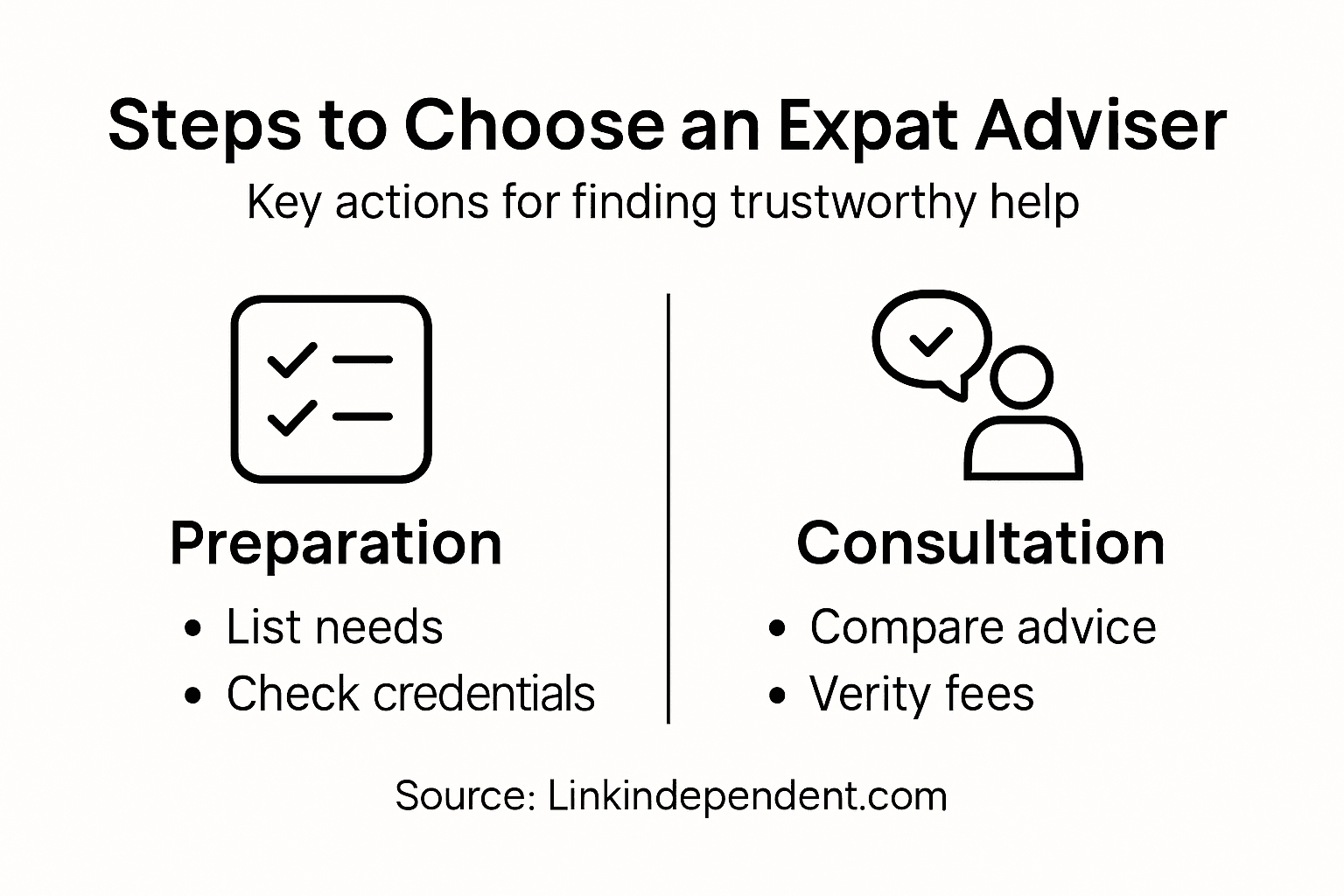
When evaluating their recommendations, check whether the advice aligns with your stated priorities. You mentioned tax optimisation was your main concern, so they should lead with tax strategies. If they’re primarily pushing investment products when you need tax planning, that’s a mismatch. Ask them to explain the reasoning behind each recommendation in plain language. If you don’t understand it, ask again. An adviser who can’t explain their advice clearly is either poor at communication or recommending something complex that doesn’t suit your needs. Consider consulting international financial frameworks that guide professional standards to assess whether an adviser’s risk management approach matches established best practices in cross-border advisory work. Trust your gut feeling too. Do you feel comfortable with this person? Do they seem genuinely interested in your situation or are they trying to close a deal? Financial relationships last years, sometimes decades. Choose someone you actually trust and respect.
Professional tip After each consultation, write down three things: what the adviser recommended, why they recommended it, and whether it felt aligned with your priorities. Compare these notes across all three consultations to spot patterns. The adviser whose recommendations most directly address your actual concerns, rather than offering generic solutions, is likely your best match.
Find Your Trusted Cross-Border Financial Expert with Confidence
Navigating the complexities of managing assets, pensions, and tax obligations across countries can feel overwhelming. This article highlights the critical need to choose regulated and transparent financial advisers who truly understand your unique expatriate challenges. Whether you are a USA citizen moving to Europe or managing multiple income streams internationally, identifying verified experts who offer clear fee structures and comply with global standards is vital to protecting your wealth and peace of mind.

Take control of your cross-border financial future today by using Linkindependent.com. Our platform specialises in connecting you with licensed and regulated advisers experienced in handling US citizens living abroad. With our simple three-step process—from defining your needs to scheduling free consultations—you gain personalised access to trusted professionals who can expertly guide you through tax planning, investment management, and pension advice tailored to your circumstances. Don’t wait until hidden fees or regulatory gaps cost you dearly. Visit Linkindependent.com now and secure your financial confidence abroad.
Frequently Asked Questions
How do I identify my cross-border financial needs as an expat?
Understanding your cross-border financial needs starts with listing your primary financial concerns, such as tax obligations, asset management, or money transfers. Write down your top three worries and main income sources to clarify your situation before consulting an expert.
What qualifications should I look for in a cross-border financial adviser?
Search for advisers with proper regulatory credentials in their operating countries, such as registrations with financial authorities. Verify their experience with expatriate clients to ensure they understand the specific challenges faced by individuals living abroad.
How can I verify the credentials of a financial adviser?
Request the adviser’s professional credentials and check them through official channels, such as national financial regulator websites. Ensure that they are registered and confirm their compliance with relevant financial regulations, such as international tax reporting standards.
Why is understanding fee structures important when choosing a financial adviser?
Understanding fee structures helps you identify any hidden costs that could impact your financial health over time. Ask for a clear breakdown of all fees associated with their services, which should be provided in writing to avoid surprises in future transactions.
What should I expect during the initial consultation with a financial expert?
During the initial consultation, expect the adviser to ask detailed questions about your financial situation before making recommendations. Come prepared with documentation of your income sources and concerns, as this will help them tailor their advice to your unique needs.
How do I evaluate the recommendations provided by a financial adviser?
Evaluate the recommendations based on whether they align with your stated financial priorities. Take notes on what they suggest and compare this across multiple consultations to identify the adviser who best addresses your specific concerns.
Recommended
Comments