

Expert Guide to Choosing Financial Advisors Abroad
- Jan 5
- 9 min read

Over half of American expatriates in Europe face financial complexities that differ dramatically from local british residents. Relocating to France, Spain, or Portugal means addressing international tax challenges, managing global assets, and planning for retirement across borders. This guide provides practical steps to help you identify reliable regulated advisers with proven expertise in cross border asset management and tax optimization, so you can confidently build and protect your wealth abroad.
Table of Contents
Key Takeaways
Important Insight | Explanation |
1. Conduct a thorough financial assessment | Evaluate your assets, income, and tax implications for a comprehensive view. |
2. Choose verified and regulated advisers | Prioritise advisers with recognised credentials and compliance for trustworthy guidance. |
3. Assess cross-border expertise | Look for qualifications indicating knowledge of international financial situations specific to expatriates. |
4. Understand and compare fee structures | Analyse different fee models to find transparent costs aligning with your financial goals. |
5. Establish ongoing support and communication | Confirm regular portfolio reviews and updates to adapt to changing financial landscapes. |
Step 1: Define your international financial needs
Navigating financial planning as an expatriate requires a strategic and comprehensive approach to understanding your unique global financial landscape. When moving abroad, your financial needs become significantly more complex than managing finances in a single country, demanding a nuanced evaluation of your personal economic situation, goals, and potential challenges.
To effectively define your international financial needs, start by conducting a thorough personal financial assessment. This involves examining your current assets, income streams, retirement objectives, tax obligations, and potential cross-border investment opportunities. Consider critical factors such as your expected duration of international residency, potential currency fluctuations, international tax implications, and long-term wealth preservation strategies. Specific areas to analyse include retirement account management, investment portfolio diversification, healthcare coverage, property ownership considerations, and potential inheritance or estate planning requirements across multiple jurisdictions.
Your financial needs assessment should also account for potential lifestyle changes, career transitions, and family dynamics that might impact your financial strategy. Work closely with professionals who specialise in international wealth management and understand the unique complexities of cross-border financial planning. Professionals from firms like Paratus Wealth or SJB Global can provide targeted guidance for American expatriates navigating European financial systems.
Professional insight: Always document your financial objectives comprehensively and update them regularly to reflect changing personal and global economic circumstances.
Step 2: Research verified, regulated advisers
Selecting a verified and regulated financial adviser is crucial for protecting your international financial interests and ensuring professional, trustworthy guidance. Your goal in this step is to methodically evaluate potential advisers through rigorous verification processes that confirm their professional credentials and regulatory compliance.

Begin by investigating an adviser’s professional standing through recognised regulatory bodies. Professional standards organisations like EFPA Europe provide comprehensive verification mechanisms that assess financial advisers based on knowledge, skills, and ethical standards. These organisations offer databases and verification tools allowing you to confirm an adviser’s certifications, professional memberships, and compliance history. Additionally, leverage resources such as FINRA’s verification processes to cross reference an adviser’s registration status and ensure they meet stringent professional requirements.
When researching potential advisers, prioritise those with demonstrated expertise in cross border financial management, particularly professionals specialising in American expatriate finances in European markets. Look for advisers who are registered with multiple regulatory bodies, have transparent fee structures, and can provide verifiable references from international clients. Examine their qualifications, years of experience, specific areas of specialisation, and track record of managing complex international financial portfolios.
Professional insight: Request and independently verify multiple professional credentials before engaging any international financial adviser to safeguard your financial interests.
Step 3: Assess cross-border expertise and credentials
Evaluating a financial adviser’s cross-border expertise requires a systematic approach that goes beyond standard professional qualifications. Your objective is to identify advisers with comprehensive international financial knowledge and proven capabilities in managing complex multinational financial portfolios.
Start by examining global professional credentials that demonstrate international financial competence. Internationally recognised certifications like the Chartered Financial Analyst credential provide robust indicators of an adviser’s ability to navigate complex investment landscapes. Look specifically for qualifications from EFPA Europe that emphasise cross-border financial advising competencies, which validate an adviser’s understanding of international regulatory environments, tax implications, and investment strategies tailored for expatriate clients.
Dig deeper by requesting comprehensive evidence of their cross-border expertise. This includes reviewing their track record with international clients, understanding their specific experience with American expatriates in European markets, and examining their professional network across different financial jurisdictions. Verify their professional memberships, request detailed case studies demonstrating successful cross-border financial management, and seek references from clients who have similar financial profiles and international mobility requirements.
Professional insight: Always request documented proof of international financial credentials and recent experience managing cross-border financial portfolios.
The following table summarises key factors that distinguish highly effective cross-border financial advisers:
Adviser Attribute | Why It Matters for Expatriates | How to Assess |
International Credentials | Ensures adviser understands regulations | Verify certifications with global bodies |
Cross-border Experience | Proven track record with international clients | Request case studies or client examples |
Regulatory Memberships | Demonstrates ongoing compliance commitment | Check presence in established registers |
Transparent Communication | Reduces misunderstandings, builds trust | Evaluate during initial consultations |
Step 4: Compare transparent fee structures
Understanding and comparing financial adviser fee structures is crucial for managing your international financial investments effectively. Your goal is to identify advisers who offer clear pricing models that align with your financial objectives and provide genuine value without hidden costs.
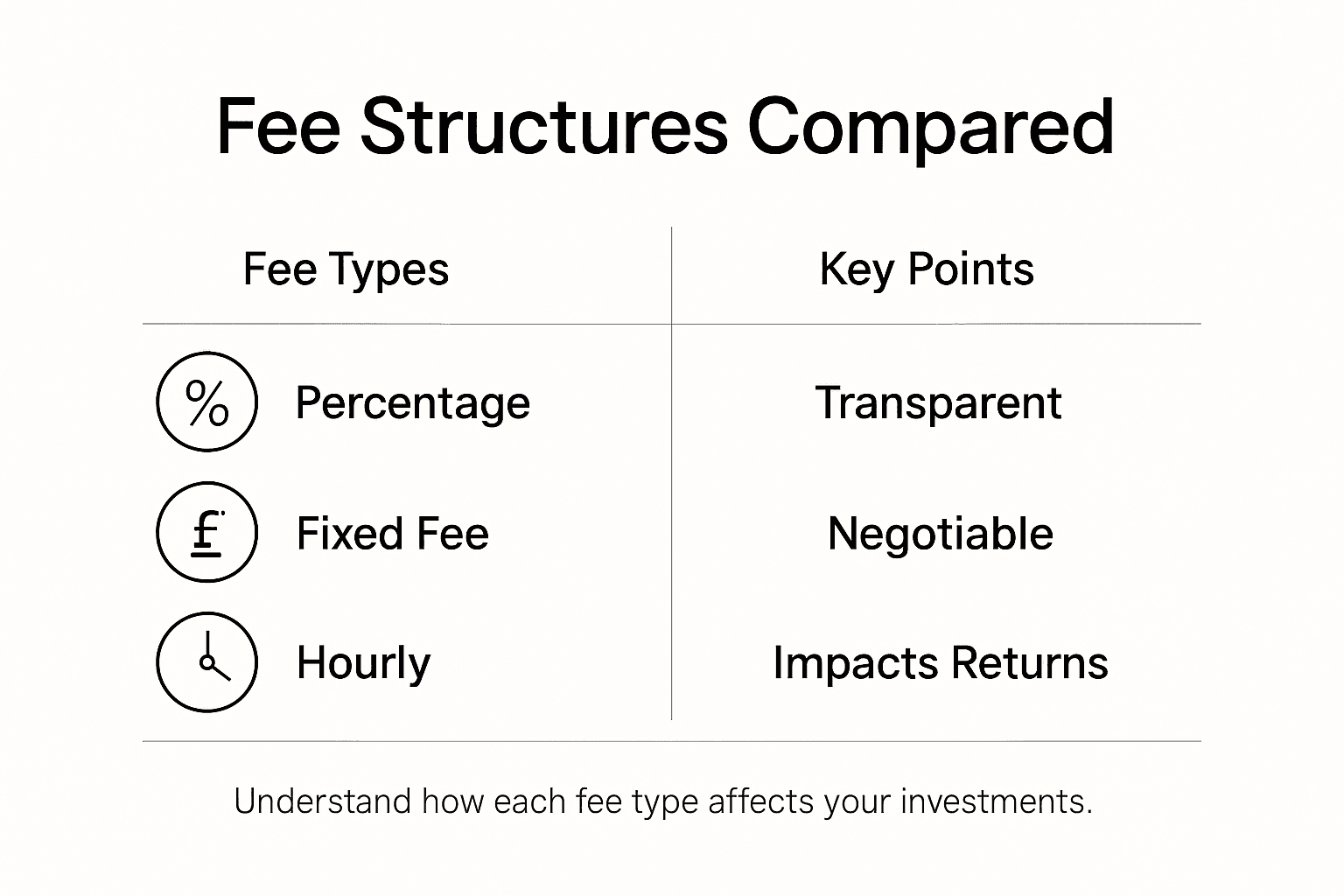
Carefully examine the different fee arrangements used by international financial advisers. Typical structures include percentage based management fees calculated as a proportion of your total assets, fixed annual fees for comprehensive services, hourly consultation rates, and commission based models. Request a detailed breakdown of all potential charges including investment management fees, transaction costs, performance bonuses, and any additional administrative expenses. Professionals from firms like Paratus Wealth and Blue Star AMG often provide transparent fee schedules that clearly outline their pricing methodology.
Pay special attention to fee transparency and potential conflicts of interest. Compare fee structures across multiple advisers and understand how each model might impact your long term financial performance. Look for advisers who offer a clear explanation of their fees, provide written documentation, and are willing to discuss how their compensation model aligns with your financial goals. Some advisers might offer hybrid models that combine different fee approaches to provide flexibility and value.
Here is a comparison of common international financial adviser fee structures and their typical impact on expatriate clients:
Fee Structure | Typical Features | Impact on Client |
Percentage-based Management | Charged as a set % of assets under advice | Scales with portfolio growth |
Fixed Annual Fee | Flat yearly cost regardless of portfolio | Predictable annual budgeting |
Hourly Consultation | Charged per hour for specific advice | Best for limited engagements |
Commission-based | Fees from product sales or transactions | Potential conflict of interest |
Hybrid Model | Mix of fixed, % and/or commission elements | May offer greater flexibility |
Professional insight: Always request a comprehensive written fee agreement and understand exactly how and when you will be charged before engaging any financial advisory service.
Step 5: Arrange and evaluate initial consultations
Arranging initial consultations is a critical step in selecting the right international financial adviser for your specific needs. Your objective is to transform these preliminary meetings from mere introductions into comprehensive assessments of professional compatibility and expertise.
The Financial Planning Standards Board recommends a transparent dialogue that explores the financial planning process and establishes clear expectations. Schedule initial consultations with multiple advisers, preferably through video conferences to accommodate international time zones. Prepare a comprehensive list of questions covering their experience with American expatriates in European markets, specific expertise in cross border taxation, investment strategies, retirement planning, and their approach to managing international financial portfolios. During these consultations, evaluate not just their technical knowledge but also their communication style, responsiveness, and ability to translate complex financial concepts into understandable guidance.
Pay close attention to how thoroughly each adviser discusses your unique financial situation. A competent cross border financial adviser will demonstrate active listening, ask probing questions about your long term financial goals, and provide nuanced insights specific to your international financial circumstances. Request detailed case studies or references from clients with similar financial profiles, particularly those who have navigated similar expatriate financial challenges. Professionals from firms like International Accl and SJB Global often excel at providing comprehensive initial consultations that address complex international financial needs.
Professional insight: Always record or take detailed notes during initial consultations to facilitate accurate comparison and informed decision making.
Step 6: Confirm ongoing support and compliance
Ensuring continuous professional support and regulatory compliance is essential for maintaining a robust international financial strategy. Your goal is to establish a long term relationship with a financial adviser who demonstrates consistent commitment to your evolving financial needs and adheres to stringent regulatory standards.
EFPA emphasises ongoing professional development and ethical standards that are crucial for international financial management. During your selection process, discuss the adviser’s mechanisms for continuous portfolio review, regulatory compliance monitoring, and adaptive financial planning. Request detailed information about their approach to keeping clients informed about changing international financial regulations, tax implications, and investment opportunities. Verify their commitment to regular communication through structured review meetings, comprehensive quarterly reports, and proactive updates on potential market shifts or regulatory changes that might impact your financial portfolio.
Pay specific attention to the adviser’s compliance infrastructure and professional credentials. Look for professionals who maintain active memberships with international financial regulatory bodies, participate in continuous professional education programmes, and can demonstrate a transparent approach to managing potential conflicts of interest. FINRA guidelines recommend regular communication and portfolio reviews as critical components of sustained financial advisory relationships. Professionals from firms like International Accl and Blue Star AMG often provide robust ongoing support frameworks designed for complex international financial scenarios.
Professional insight: Request a comprehensive service agreement that clearly outlines the frequency and nature of ongoing support and communication.
Navigate Your Cross-Border Financial Journey with Confidence
Choosing the right international financial adviser is a complex challenge filled with crucial decisions about credentials, fee transparency, and cross-border expertise. This expert guide highlights common pain points such as verifying regulated professionals, understanding diverse fee structures, and ensuring ongoing compliance across jurisdictions. If you are an American expatriate looking to manage taxes, 401(k)s, pensions or investments in Europe or beyond, the stakes could not be higher when it comes to trusting your financial future.
Bold steps towards simplifying this process are within your reach. At Linkindependent, we specialise in connecting you with verified, regulated advisers who meet rigorous global standards and understand the unique demands of expatriate finances. Our streamlined platform ensures your needs come first—from clearly defining your financial goals to matching you with professionals renowned for transparency and international expertise.
Experience peace of mind knowing your consultation is free and your adviser vetted. Discover personalised solutions designed specifically for cross-border financial complexity today.

Take control of your global financial wellbeing now by visiting Linkindependent.com to find your trusted adviser. Don’t leave your international financial future to chance. Get matched with experts who put your goals and clarity first.
Frequently Asked Questions
How do I define my financial needs before selecting a financial adviser abroad?
To define your financial needs, conduct a thorough personal financial assessment, examining your assets, income, retirement goals, and tax obligations. Focus on identifying your unique situation and long-term objectives to inform your decision.
What should I look for when researching financial advisers in another country?
When researching financial advisers, verify their professional credentials and regulatory compliance through recognised organisations. Prioritise advisers with expertise in cross-border financial management and a clear understanding of the regulations pertinent to your specific circumstances.
How can I assess a financial adviser’s cross-border expertise?
To assess an adviser’s cross-border expertise, review their qualifications and track record with international clients. Look for evidence of experience managing complex financial portfolios across multiple jurisdictions, specifically with expatriates.
What fee structures should I consider when choosing a financial adviser?
Consider various fee structures, such as percentage-based management fees, fixed annual fees, and hourly consultation rates. Request a detailed breakdown of all potential charges to ensure transparency and to evaluate how each model aligns with your financial goals.
How should I prepare for an initial consultation with a financial adviser?
Prepare for an initial consultation by compiling a comprehensive list of questions about the adviser’s experience, investment strategies, and approach to cross-border taxation. This will help you gauge their ability to address your specific financial needs and establish compatibility.
What ongoing support should I expect from my financial adviser?
You should expect regular communication, portfolio reviews, and updates on any changes in financial regulations. Discuss the frequency and nature of ongoing support during your initial meetings to ensure they align with your expectations.
Recommended
Comments