

International Asset Protection Guide for US Expats in Europe
- Feb 25
- 9 min read

Moving from the United States to Europe brings excitement but also highlights the real challenge of protecting your wealth and staying compliant across different countries. With millions of expatriates facing complex choices, building a clear picture of your assets is the first critical step in cross-border asset protection. This guide cuts through legal jargon to help you take measured steps in valuing your assets, planning your legal structures, and meeting the tax and compliance demands of life between the United States and Europe.
Table of Contents
Quick Summary
Key Insight | Explanation |
1. Document All Your Assets | Inventory everything you own, including real estate and digital assets, for tax and protection planning. |
2. Choose Legal Structures Wisely | Select appropriate legal forms that protect assets and minimise taxes in various jurisdictions. |
3. Consult Regulated Advisers | Engage qualified professionals familiar with cross-border laws to guide your asset protection strategy. |
4. Maintain Comprehensive Compliance | Regularly update compliance calendars to avoid penalties and ensure adherence to multiple jurisdictions. |
5. Evaluate Structures Periodically | Review your asset protection arrangements annually to adapt to changes in regulations or personal circumstances. |
Step 1: Identify and Value Assets Across Borders
Your first task is to create a complete inventory of everything you own, regardless of where it sits geographically. This foundation determines your protection strategy and tax obligations across multiple jurisdictions.
Start by listing all asset categories you hold:
Real estate (primary residence, holiday homes, investment properties)
Investment accounts (stocks, bonds, mutual funds, exchange-traded funds)
Retirement accounts (401(k)s, IRAs, pensions)
Business interests (sole proprietorships, partnerships, shareholdings)
Cash and bank deposits
Personal property (vehicles, art, collectibles)
Digital assets (cryptocurrency, online businesses)
Next, understand that cross-border asset planning requires identifying assets in different jurisdictions with diverse legal frameworks and tax systems. Your American home carries different implications than a flat you own in Germany or a rental property in Spain.
Value each asset at current market rates using reliable sources. For real estate, obtain professional valuations from qualified surveyors in each country. Investment accounts should be valued using the exchange rates from your valuation date. If you own a business, consider hiring an independent appraiser who understands cross-border valuations.
Document everything thoroughly. Tax authorities in both the United States and Europe expect detailed records of what you own, where you own it, and what it’s worth.
Create a spreadsheet that includes the asset description, location, acquisition date, original cost, current value, and the currency in which it’s valued. Include contact details for custodians or property managers. This becomes your master document for tax reporting and asset protection planning.
Don’t forget hidden assets. Many expats overlook digital bank accounts in their home country, inheritance rights, or investment accounts they’ve forgotten about. Conduct a thorough review of all financial institutions you’ve dealt with over the past decade.
Pro tip: Use a dedicated secure digital vault or encrypted spreadsheet to store this inventory, keeping copies with your accountant and solicitor across different locations. This ensures your family and advisers can access critical information if needed.

Step 2: Select Appropriate Legal Structures for Protection
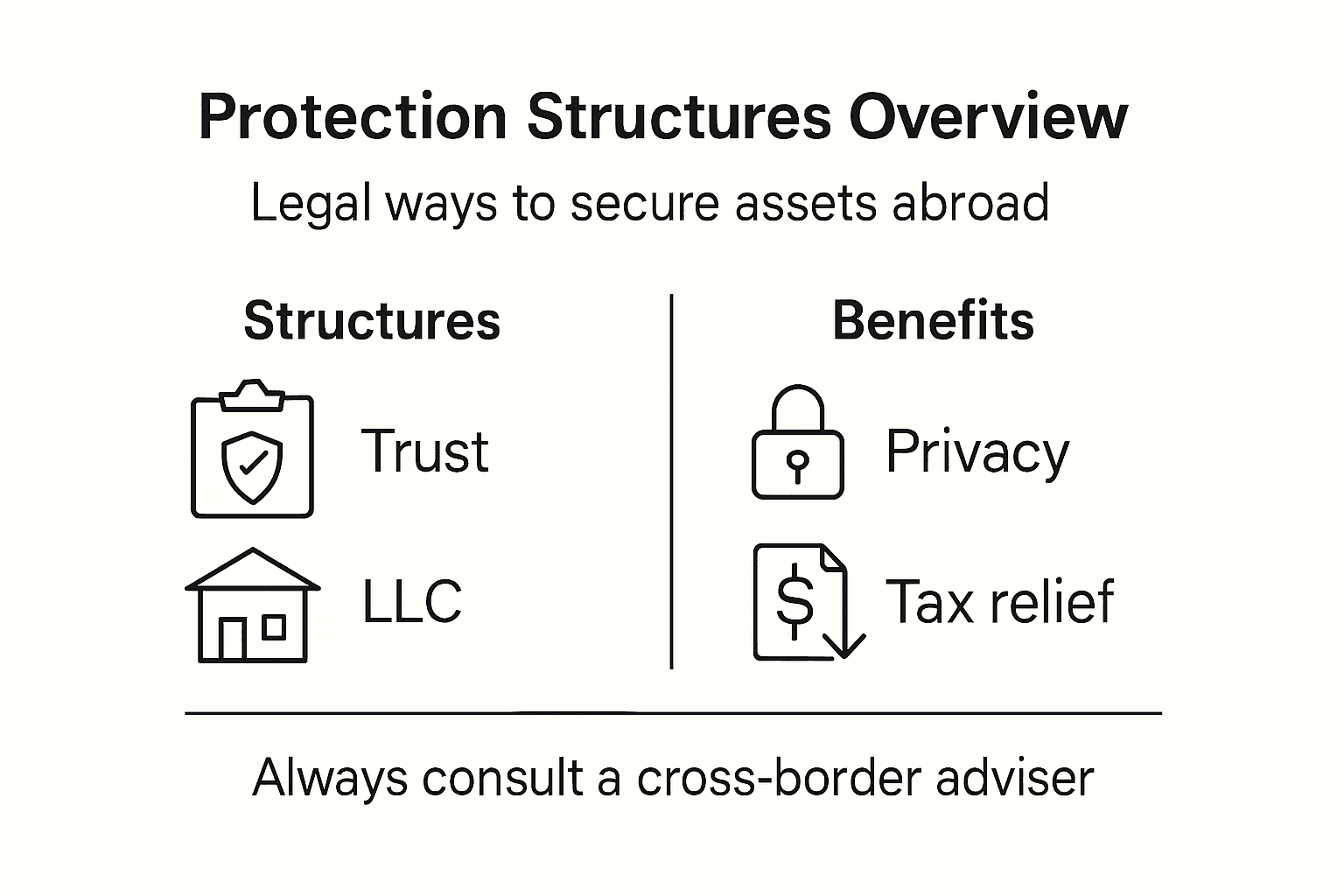
Now that you’ve catalogued your assets, you need to decide how to hold them legally. The right structure shields your wealth from creditors, minimises tax burden, and simplifies cross-border compliance.
Understand the main options available to you:
Trusts (discretionary, revocable, or irrevocable arrangements)
Limited liability companies (separate legal entities for business interests)
Holding companies (corporate vehicles that own other assets)
Partnerships (formal arrangements for joint ownership)
Foundations (particularly useful in some European countries)
Individual ownership (straightforward but often least protective)
Each structure carries different tax implications, privacy benefits, and liability protection. A trust in the United Kingdom works differently from a similar arrangement in Germany or France. International wealth planning requires understanding how your chosen structure operates in each jurisdiction where you hold assets.
Consider your specific situation. If you own investment property in Spain, a Spanish limited company might protect that asset better than personal ownership. If you have a pension in the United States and assets in Europe, your protection strategy must address both jurisdictions separately.
Also evaluate whether your chosen structure allows for efficient wealth transfer. Some legal entities provide succession planning benefits, allowing you to pass assets to heirs with minimal tax consequences. Others may trigger inheritance taxes across multiple countries.
The wrong structure can cost you thousands in unnecessary taxes and expose your assets to unexpected claims. Professional guidance here pays for itself immediately.
You’ll need specialist advice from qualified solicitors and accountants who understand both American law and the specific European country where you’re establishing your structure. They can recommend whether trusts, companies, or foundations best serve your protection goals.
Don’t overlook regulatory requirements. Setting up a limited company in Spain requires different documentation than establishing one in Portugal. Each jurisdiction has specific rules about foreign ownership, capital requirements, and compliance obligations.
Pro tip: Establish your legal structures before moving significant wealth across borders. Setting them up retroactively complicates matters and may trigger unfavorable tax treatment.
Here’s a concise comparison of common legal structures for cross-border asset protection:
Structure Type | Main Benefits | Tax Complexity | Typical Use Case |
Trust | Estate planning, privacy | Moderate to high | Legacy planning for families |
Limited Company | Liability protection | Moderate | Rental property ownership |
Holding Company | Asset consolidation | High | Multinational investments |
Foundation | Philanthropy, succession | High | Passing wealth to charities |
Partnership | Shared risk, flexibility | Moderate | Joint business ownership |
Individual Ownership | Simple to manage | Low | Direct investment management |
Step 3: Engage Regulated Cross-Border Advisers
You cannot protect your assets effectively alone. This step connects you with qualified professionals who understand both American and European regulations, tax codes, and compliance requirements.
Start by identifying advisers with the right credentials and experience. Look for professionals who hold recognised qualifications in their specific field:
Chartered financial planners or certified financial advisers
Solicitors qualified in both US and European law
Accountants licensed to practice cross-border taxation
Tax specialists with experience advising American expatriates
Wealth managers registered with relevant regulatory bodies
Verify that each adviser holds current licenses in their jurisdiction. Why regulated advisers matter for cross-border work cannot be overstated. An unregistered adviser may offer cheaper fees but leaves you exposed to fraud, poor advice, and potential legal liability.
Check regulatory databases in each country. The Financial Conduct Authority oversees advisers in the United Kingdom. Spain has the Comisión Nacional del Mercado de Valores. France regulates through the Autorité des Marchés Financiers. Germany uses BaFin. Each country maintains public registers showing which professionals hold valid licenses.
Seek advisers who specialise specifically in American expatriate needs. General wealth managers often lack expertise in US tax reporting obligations, Foreign Account Tax Compliance Act requirements, and the complexities of holding US retirement accounts abroad.
Choose advisers who charge transparent, disclosed fees rather than commission-based compensation. Fee-only professionals have fewer conflicts of interest when recommending solutions.
Interview multiple candidates before committing. Ask about their experience with clients in your exact situation. Request references from other American expats they’ve advised. Understand their fee structure completely and get it in writing.
Ensure advisers communicate clearly across all your jurisdictions. Your UK solicitor, Spanish accountant, and American tax adviser must coordinate effectively. Miscommunication between advisers creates compliance gaps and tax inefficiencies.
Pro tip: Ask potential advisers about their professional indemnity insurance and whether they’ve faced regulatory complaints. This information often appears in public regulatory records and reveals whether they maintain professional standards.
Step 4: Implement Ongoing Compliance and Monitoring
Asset protection doesn’t end once you’ve established your structures. This final step ensures your arrangements remain compliant, tax-efficient, and responsive to changing circumstances across multiple jurisdictions.
Start by establishing a compliance calendar. Mark key dates for annual reporting, tax filings, and regulatory submissions in each country where you hold assets:
US tax returns (1040, FBAR, FATCA forms) due in April
European national tax returns due at varying times throughout the year
Annual accounts filing for any corporate structures
Beneficial ownership register updates required by some countries
Trust reporting requirements in jurisdictions where trusts are registered
Understand that building a global compliance framework requires knowing which laws apply to your situation. Anti-money laundering directives, Know Your Customer procedures, and Foreign Account Tax Compliance Act requirements all demand proper documentation and timely reporting.
Implement regular monitoring of your assets and structures. Review valuations annually, particularly for real estate and investments. Update your advisers whenever circumstances change significantly. A major inheritance, significant business sale, or relocation to a different European country all trigger compliance adjustments.
Maintain detailed records of all transactions and communications. Documentation proves your good faith compliance efforts if regulators ever question your arrangements. Keep copies of valuations, legal documents, tax filings, and adviser correspondence in a secure, organised system.
Compliance costs money, but non-compliance costs far more. Missing a single reporting deadline can trigger penalties exceeding your annual adviser fees.
Schedule regular reviews with your adviser team at least annually. Discuss any changes in tax law, new reporting requirements, or shifts in your personal circumstances. Use these meetings to ensure all advisers remain coordinated and your strategy remains optimised.
Consider using technology to streamline monitoring. Some advisers use secure portals where you can upload documents, view compliance deadlines, and track filing status. This visibility reduces the risk of missed obligations.
Pro tip: Set calendar reminders three months before each major filing deadline, giving your advisers adequate time to gather information and prepare submissions without rushing.
Below is a summary of essential ongoing compliance tasks for cross-border asset owners:
Task | Frequency | Who Is Responsible |
Valuation updates | Annually | Owner/adviser |
National tax filing | Each jurisdiction | Accountant/tax specialist |
Regulatory reporting | As required | Legal adviser |
Entity accounts submission | Yearly | Company accountant |
Adviser team review | Annually | All professional advisers |
Secure Your Cross-Border Assets with Trusted Experts
Navigating the complexities of international asset protection for American expats in Europe can be overwhelming. From valuing diverse assets across multiple countries to selecting the right legal structures and maintaining strict compliance, the challenges are significant. If you are striving to safeguard your wealth, reduce tax risks, and ensure seamless coordination among your advisers, you are not alone. Understanding terms like trusts, holding companies, and regulatory obligations is crucial but can feel daunting without experienced guidance.
Linkindependent.com specialises in connecting American expatriates with verified, regulated financial professionals who understand your unique cross-border needs. Whether you require expert advice on managing your 401(k)s, pensions, European real estate, or cross-border taxation, our platform simplifies your search. Experience transparent, personalised matches to licensed advisers who prioritise your financial security and legal compliance. Don’t risk costly mistakes or missed deadlines when protecting your international wealth.
[

Take control of your cross-border asset protection today. Visit Linkindependent.com to find trusted advisers ready to help you implement effective structures and maintain ongoing compliance. Secure your financial future with professionals who know the complexities of American expat life in Europe. Start your free consultation now and put your wealth protection plan in motion.
Explore how we assist with cross-border asset planning, expert wealth solutions, and connecting you with regulated advisers at Linkindependent.com.
Frequently Asked Questions
How do I inventory my assets as a US Expat in Europe?
Begin by listing all asset categories you hold, including real estate, investment accounts, and digital assets. Create a spreadsheet detailing each asset’s description, location, acquisition date, and current value. This comprehensive inventory will help you determine your asset protection strategy and tax obligations across multiple jurisdictions.
What legal structures should I consider for protecting my assets?
Evaluate structures such as trusts, limited liability companies, and partnerships to safeguard your wealth. Choose a structure based on your specific situation, as different entities offer varying levels of protection and tax implications. Ensure you consult with a professional to help select the best option for your circumstances.
How can I find qualified advisers for my cross-border asset protection needs?
Look for professionals with recognised qualifications in financial planning, law, and taxation, specifically related to American expatriates. Verify their credentials and experience in handling US-European asset protection matters, as this will ensure they understand the complexities of both legal systems. Schedule initial consultations to assess their expertise and approach before making a selection.
What ongoing compliance tasks should I be aware of as a US Expat?
Establish a compliance calendar that includes annual tax filings, regulatory submissions, and asset valuations. Regularly review your asset structures and tax obligations to ensure they remain tax-efficient and compliant with local regulations. Consider scheduling meetings with your advisers at least annually to discuss any changes in laws or personal circumstances.
How can I keep my asset records secure and accessible?
Use a secure digital vault or encrypted spreadsheet to store your inventory and important documents. Regularly back up this information and maintain copies with your accountant and solicitor to ensure that your family and advisers can access critical details when necessary. Aim to review these records at least once a year to keep them updated and relevant.
Recommended
Comments