

Role of Advisers in Expatriate Finance Explained
- martinblyth
- Jan 3
- 7 min read

Most American professionals moving to Europe discover that managing british pensions and cross-border investments is far more challenging than expected. With over 35 percent of expatriates reporting confusion around international tax rules, the need for specialised financial guidance becomes clear. This overview reveals how regulated advisers help American expats master complex rules and safeguard retirement funds across European borders.
Table of Contents
Key Takeaways
Point | Details |
Specialised Financial Advisers are Essential | Expatriates face unique financial challenges that require specialised advisers for areas such as tax planning and investment management. |
Understanding Adviser Types is Crucial | Different types of financial advisers provide tailored services to expatriates, including tax planning, investment strategy, and retirement planning. |
Due Diligence on Advisers is Necessary | Expatriates should thoroughly verify an adviser’s credentials and experience to ensure they are qualified to handle cross-border financial complexities. |
Be Aware of Fee Structures and Risks | It’s important to evaluate an adviser’s fee structure and potential conflicts of interest to avoid unexpected costs and ensure a transparent relationship. |
Defining Expatriate Finance and Advisers’ Role
Expatriate finance represents a complex financial management landscape for individuals living and working outside their home country. Global mobility increasingly requires specialised financial guidance that addresses unique cross-border financial challenges faced by professionals relocating internationally.
Financial advisers specialising in expatriate services play a critical role in navigating these intricate financial environments. These professionals provide comprehensive support across multiple dimensions, including international tax planning, investment strategy, retirement fund management, and regulatory compliance. Expatriates typically require expert guidance to manage the nuanced financial regulations of their host and home countries, ensuring they remain financially compliant and strategically positioned.
The core responsibilities of expatriate financial advisers encompass several key areas: managing cross-border tax implications, structuring investment portfolios that account for international restrictions, providing pension and retirement planning, and offering strategic financial advice tailored to the unique circumstances of globally mobile professionals. Their expertise extends beyond traditional financial planning, incorporating deep understanding of international financial systems, currency exchange dynamics, and the legal frameworks governing financial transactions across different jurisdictions.
Professional Insight: Research and interview multiple specialised expatriate financial advisers before making a commitment, ensuring their experience matches your specific international financial needs.
Types of Financial Advisers for Expats
Expatriate financial advisers represent a specialised professional category with diverse backgrounds and expertise. Financial professionals serving expatriates can emerge from multiple disciplines, including investment brokers, tax consultants, insurance specialists, and chartered accountants, each bringing unique perspectives to international financial management.
The primary categories of financial advisers for expatriates typically include cross-border financial planners, international tax advisers, investment management specialists, and retirement strategy consultants. Investment advisers play a particularly crucial role, providing comprehensive guidance on securities, mutual funds, and financial planning while adhering to legal requirements to act in their clients’ best interests.

Each type of adviser offers distinct services tailored to expatriate needs. Cross-border financial planners focus on managing assets across multiple jurisdictions, international tax advisers help navigate complex taxation treaties, investment management specialists develop globally diversified portfolios, and retirement strategy consultants ensure long-term financial stability for professionals working internationally. Their collective expertise helps expatriates mitigate risks, optimise financial performance, and maintain compliance with varied international financial regulations.
Below is a summary of the main types of financial advisers for expatriates and how their services differ:
Adviser Type | Primary Focus | Distinctive Expertise |
Cross-border financial planner | Asset management across countries | International portfolio structuring |
International tax adviser | Navigating global tax treaties | Minimising cross-jurisdictional tax |
Investment management specialist | Diversified global investments | Risk control amid currency fluctuation |
Retirement strategy consultant | Long-term financial security | Pension solutions for international careers |
Pro Tip: Always verify an expatriate financial adviser’s specific credentials, international experience, and regulatory certifications before engaging their services.
Regulatory Standards and Adviser Credentials
Global regulatory frameworks play a critical role in defining the credentials and professional standards for financial advisers working with expatriates. These comprehensive standards ensure that financial professionals maintain rigorous compliance, protect client interests, and operate with transparency across international jurisdictions.
The credentialing process for expatriate financial advisers involves multiple layers of professional certification and regulatory oversight. Key credentials include chartered financial analyst (CFA) designations, certified financial planner (CFP) certifications, and specific international financial advisory qualifications. The International Organization of Securities Commissions (IOSCO) establishes globally recognised standards that many countries integrate into their national regulatory frameworks, creating a consistent approach to investor protection and professional conduct.
Financial advisers working with expatriates must typically demonstrate expertise in several critical areas: cross-border taxation, international investment regulations, currency risk management, and comprehensive financial planning across multiple jurisdictions. This requires ongoing professional development, adherence to strict ethical standards, and the ability to navigate complex international financial landscapes while maintaining full regulatory compliance and client confidentiality.
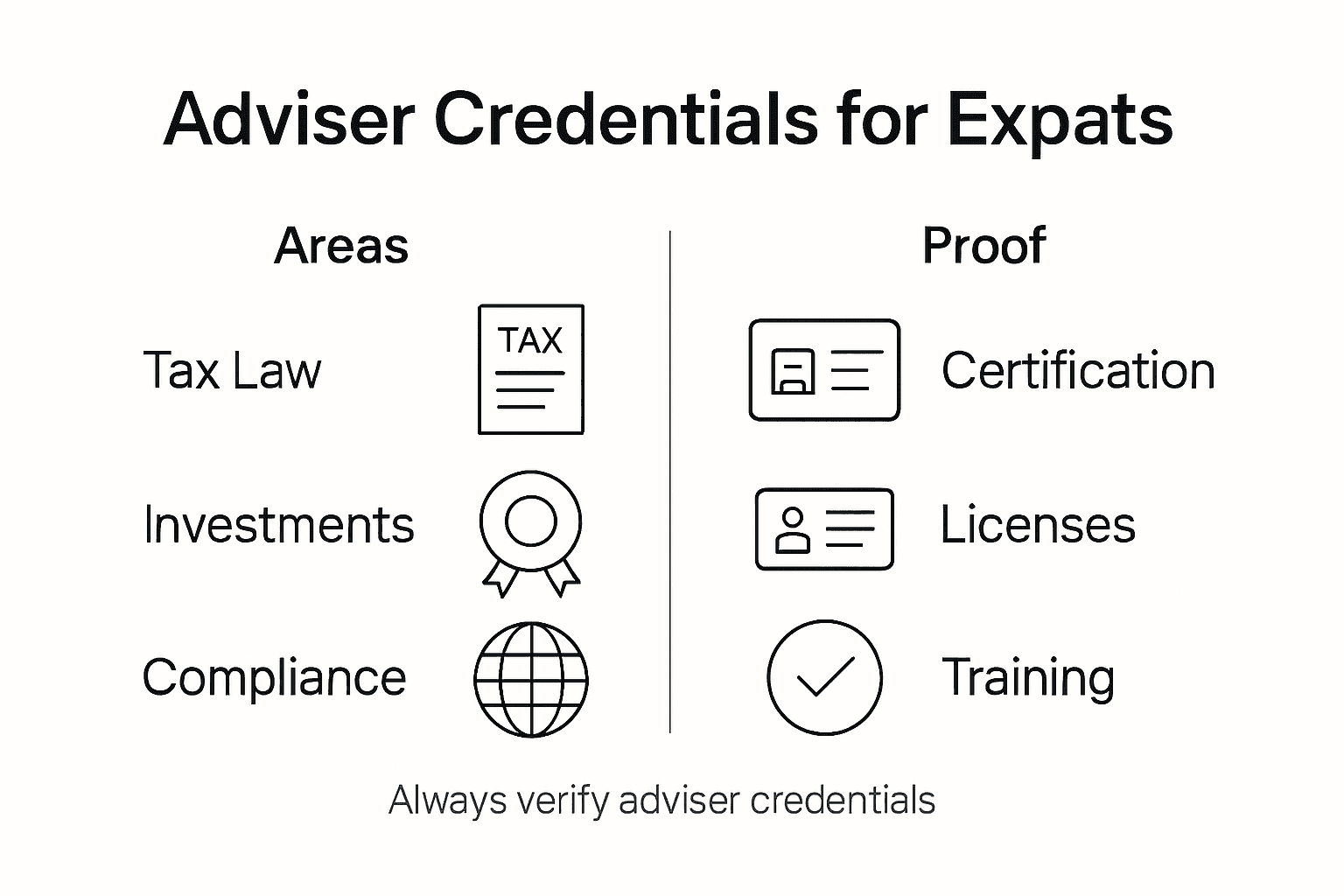
Pro Tip: Always request and independently verify an adviser’s professional credentials, regulatory registrations, and specific experience with expatriate financial management before establishing a working relationship.
How Advisers Address Cross-Border Challenges
Cross-border financial challenges require sophisticated strategies that financial advisers implement to support expatriate clients navigating complex international financial landscapes. These professionals develop nuanced approaches to manage the intricate web of regulatory, taxation, and financial compliance issues that emerge when individuals operate across multiple national boundaries.
The primary mechanisms advisers employ include comprehensive risk management strategies, detailed financial mapping, and proactive compliance monitoring. They address critical challenges such as currency exchange volatility, international tax treaty interpretations, investment portfolio diversification, and navigating differing regulatory environments. Cross-border data flow regulations significantly impact how financial services are delivered, requiring advisers to ensure secure and compliant data sharing across jurisdictions, which demands exceptional technical and legal expertise.
Additionally, expatriate financial advisers must continuously adapt to evolving international financial regulations, technological innovations, and geopolitical shifts. They provide strategic guidance on complex issues like international pension transfers, tax-efficient investment structures, global asset protection, and seamless financial transitions between countries. Their role extends beyond traditional financial advice, acting as strategic partners who help clients maintain financial stability and growth while managing the inherent complexities of cross-border financial management.
Pro Tip: Select a financial adviser with demonstrable experience in multiple international jurisdictions and a proven track record of managing cross-border financial complexities.
Risks, Costs, and Choosing the Right Adviser
Selecting the appropriate financial adviser demands careful consideration of potential risks, comprehensive cost analysis, and thorough evaluation of professional credentials. Expatriates must navigate a complex landscape of financial expertise, understanding that the right adviser can significantly impact their international financial strategy.
The primary risks associated with choosing a financial adviser include potential conflicts of interest, opaque fee structures, and varying levels of international financial expertise. Advisers may be compensated through different mechanisms such as commission-based models, fee-only arrangements, or hybrid approaches, each presenting unique potential conflicts. Expatriates should meticulously assess an adviser’s compensation structure, requesting full transparency about how recommendations might be influenced by financial incentives.
This table compares typical adviser fee structures and outlines possible risks for expatriates:
Fee Structure | How Fees Are Charged | Potential Risks for Expatriates |
Commission-based | Fees from product providers | Adviser bias, hidden costs |
Fee-only | Fixed client payments | Higher upfront costs, perceived less flexibility |
Hybrid models | Mix of fees and commissions | Complex pricing, conflict of interest |
Critical evaluation criteria for selecting an expatriate financial adviser include professional qualifications, track record of international financial management, regulatory compliance, and demonstrated understanding of cross-border financial complexities. Expatriates should request comprehensive documentation of an adviser’s credentials, verify professional registrations, examine client testimonials, and assess their specific experience with international financial planning. A robust due diligence process helps mitigate risks and ensures alignment between the adviser’s capabilities and the client’s complex financial requirements.
Pro Tip: Request a detailed written breakdown of all potential fees, including hidden charges, and compare at least three different financial advisers before making a final selection.
Secure Expert Guidance for Your Expatriate Financial Journey
Managing cross-border financial challenges demands expert advice tailored to your unique expatriate situation. The article highlights key pain points including navigating international tax treaties, handling currency risks, and finding advisers with verified credentials who can provide transparent fee structures and strategic investment planning. For American expatriates especially moving to Europe, ensuring that your adviser understands complex regulations around 401ks, pensions, and cross-border taxation is essential for financial peace of mind.
Linkindependent.com is your trusted platform to overcome these challenges with ease. We connect you to verified, regulated financial professionals worldwide who specialise in expatriate finance. Whether you seek cross-border tax advisers, investment managers, or retirement strategy consultants, our personalised matching process simplifies your search. Experience transparency, independence, and a global reach designed to protect your wealth and future.

Take control of your international finances today. Visit Linkindependent.com to define your specific financial needs, get matched with experts who understand your expatriate goals, and schedule your free consultation. Don’t delay securing trusted guidance that aligns with the complexities of your global lifestyle.
Explore more about how we support cross-border finance solutions at https://www.linkindependent.com/ and step confidently into your financial future.
Frequently Asked Questions
What is expatriate finance?
Expatriate finance refers to the financial management challenges faced by individuals living and working outside their home country, which require specialised guidance to navigate cross-border issues.
What types of services do expatriate financial advisers provide?
Expatriate financial advisers offer services like international tax planning, investment strategy, retirement fund management, and regulatory compliance to help clients manage their finances effectively across multiple countries.
How can I assess if a financial adviser is suitable for expatriate services?
You should verify their professional credentials, international experience, and regulatory certifications. Additionally, examine their track record in expatriate financial management to ensure they align with your specific financial needs.
What are the main challenges faced by expatriates in financial management?
Expatriates often face challenges related to cross-border tax implications, currency exchange volatility, varying regulations in different jurisdictions, and the complexity of managing investments and retirement funds across borders.
Recommended
Comments