

Why Choose Independent Financial Advice Worldwide
- Dec 15, 2025
- 7 min read

Only about one in five British investors work with a truly independent adviser, yet this decision could reshape your entire financial future. When it comes to safeguarding wealth and making informed decisions, understanding what sets independent financial advice apart is vital. Explore how independence unlocks a broader range of tailored solutions compared to bank-led services and why discerning British clients increasingly value expert guidance free from bias and institutional pressure.
Table of Contents
Key Takeaways
Point | Details |
Independent Financial Advice Offers Personalisation | It prioritises client-specific goals, enabling tailored recommendations through unrestricted market access. |
Fiduciary Responsibilities Set Independent Advisers Apart | Unlike bank-based advisers, independent advisers operate under strict fiduciary standards, ensuring client interests come first. |
Transparent Fee Structures Enhance Client Trust | Clear, upfront pricing models remove hidden charges, aligning adviser incentives directly with client outcomes. |
Navigating Cross-Border Finances Requires Expertise | Comprehensive strategies addressing international regulations and tax implications are essential for managing global financial complexities. |
Independent Financial Advice Defined
Independent financial advice represents a sophisticated approach to personalised financial guidance where professionals offer recommendations free from institutional constraints or product biases. Independent financial advisers are uniquely positioned professionals who analyse an entire market landscape to recommend the most suitable financial solutions for individual client needs.
At its core, independent financial advice means receiving recommendations that prioritise your specific financial objectives over any institutional preferences. Market-wide product selection enables advisers to evaluate options comprehensively, ensuring clients receive strategies tailored precisely to their unique circumstances. This approach distinguishes independent advisers from tied agents who might recommend products limited to a single provider’s range.
Key characteristics of independent financial advice include:
Unrestricted access to financial products across multiple providers
Personalised recommendations based on comprehensive client assessment
Transparent fee structures without hidden commissions
Regulatory compliance and professional accountability
Holistic financial planning considering long term client goals
The strategic value of independent financial advice lies in its ability to navigate complex financial landscapes with objectivity and client-focused expertise. Professionals in this domain combine deep market knowledge, regulatory understanding, and personalised analysis to craft bespoke financial strategies that adapt to changing individual and economic circumstances.
How Independent Advisers Differ From Banks
Independent financial advisers and bank-based financial services fundamentally diverge in their approach to client financial management and recommendations. Registered Investment Advisors (RIAs) operate under a strict fiduciary standard, which legally mandates they prioritise client interests above their own financial gains - a critical distinction from traditional banking models.

The primary differences emerge in recommendation frameworks and financial product perspectives. Bank-based advisers typically recommend products exclusively from their institutional portfolio, creating inherent conflicts of interest. Independent advisers, by contrast, can access comprehensive market offerings, enabling genuinely unbiased strategic financial planning tailored precisely to individual client requirements.
Key differentiating factors include:
Fiduciary responsibility versus product sales targets
Unrestricted product access versus institutional limitations
Transparent fee structures versus commission-driven models
Personalised financial strategies versus standardised banking approaches
Comprehensive market analysis versus narrow institutional perspectives
This approach transforms financial advice from a transactional interaction into a strategic partnership. Independent advisers function as financial architects, constructing nuanced strategies that adapt dynamically to changing personal circumstances, economic shifts, and long-term client objectives. Their independence ensures recommendations stem from comprehensive analysis rather than institutional pressures, providing clients with more authentic, flexible, and client-centric financial guidance.
Regulatory Standards And Global Compliance
Independent financial advisers in the United Kingdom operate within a stringent regulatory framework designed to protect client interests and maintain the highest professional standards. The regulatory landscape for financial advice has become increasingly sophisticated, requiring advisers to demonstrate comprehensive knowledge, ethical conduct, and transparent practices across international markets.
Global regulatory compliance encompasses multiple critical dimensions beyond mere procedural adherence. Financial professionals must navigate complex legal requirements that vary significantly between jurisdictions, ensuring client protection through rigorous qualification standards, continuous professional development, and robust accountability mechanisms. This multilayered approach demands advisers maintain extensive understanding of local and international financial regulations, tax implications, and investment protection protocols.
Key regulatory compliance elements include:
Professional certification and ongoing training requirements
Mandatory disclosure of potential conflicts of interest
Regular audit and reporting standards
Strict client fund protection guidelines
Comprehensive record-keeping and documentation practices
Adherence to anti-money laundering regulations
Transparent fee structure documentation
The evolving regulatory environment represents a dynamic ecosystem where financial advisers must demonstrate adaptability, technical expertise, and unwavering commitment to ethical practice. Professionals who successfully navigate these complex compliance landscapes provide clients with confidence that their financial strategies are not only strategically sound but also legally and ethically constructed, offering protection and peace of mind in an increasingly intricate global financial marketplace.
Fee Structures And Transparency Explained
Independent advisory firms have pioneered a revolutionary approach to financial service fees, prioritising client interests through clear, upfront pricing models that eliminate hidden charges and potential conflicts of interest. Fee transparency has become a cornerstone of modern financial advisory services, representing a fundamental shift from traditional commission-based compensation structures.
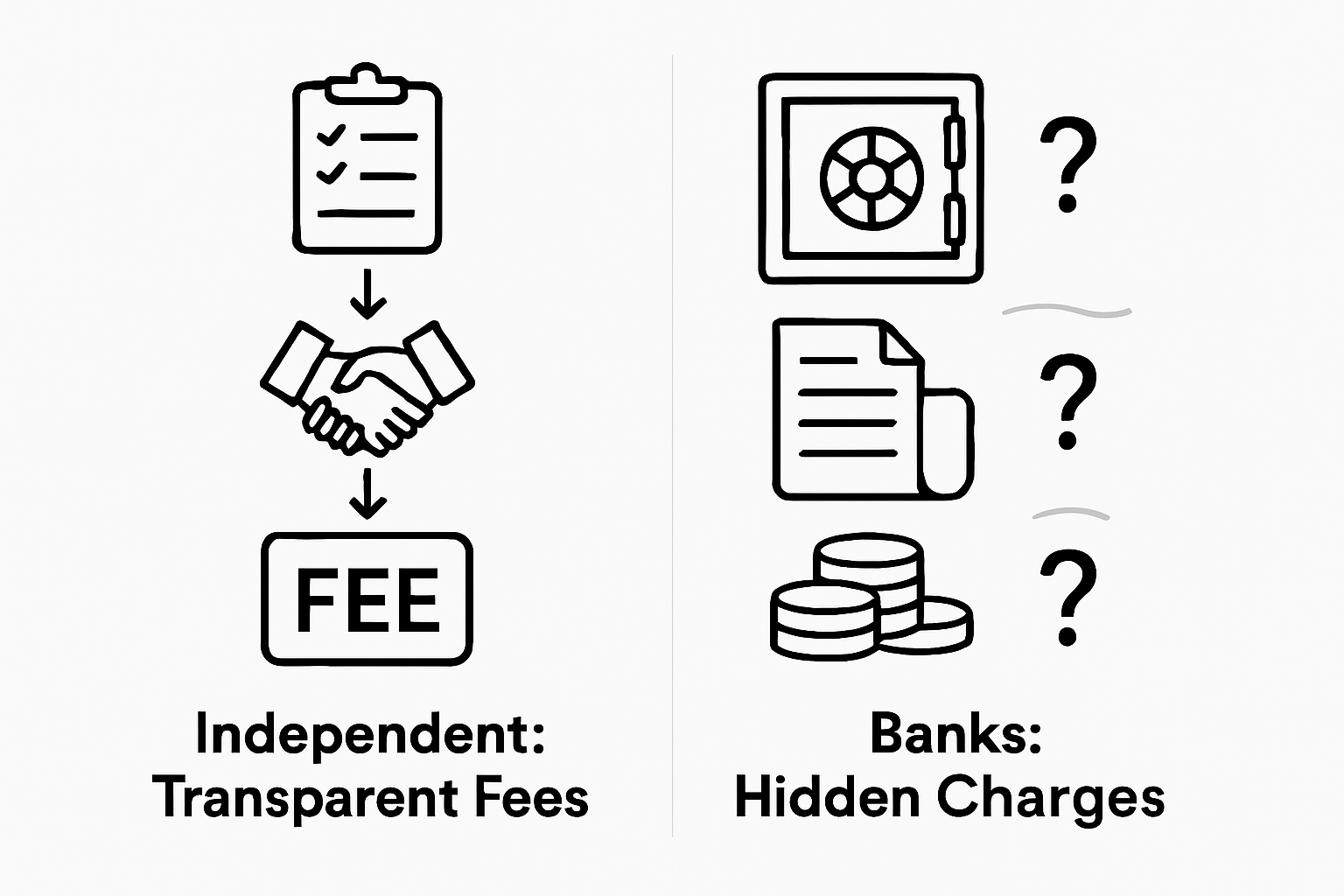
The contemporary fee landscape encompasses multiple structured approaches designed to align advisor incentives directly with client outcomes. These models range from percentage-based management fees calculated on total assets, fixed annual retainer fees, hourly consultation rates, and project-specific pricing. Each approach offers distinct advantages, allowing clients to select a fee structure most compatible with their specific financial planning requirements and complexity of services needed.
Key fee structure characteristics include:
Predetermined, clearly documented pricing
No hidden commissions or embedded product sales incentives
Fees directly correlated with service complexity
Transparent calculation methodologies
Regular financial reporting and fee breakdown
Flexible engagement models
Proportional pricing based on portfolio sophistication
Ultimately, fee transparency represents more than a pricing mechanism; it embodies a fundamental commitment to client trust, professional integrity, and comprehensive financial guidance. By eliminating opaque compensation structures, independent financial advisers create a partnership model where client success becomes the primary measurement of professional performance, transforming financial advice from a transactional service to a strategic, collaborative relationship.
International Solutions For Cross-Border Finances
Cross-border financial management represents a complex landscape requiring sophisticated, nuanced approaches that transcend traditional geographical and regulatory boundaries. Global financial strategies demand comprehensive understanding of international taxation, investment regulations, retirement planning, and wealth preservation techniques that can successfully navigate the intricate challenges faced by internationally mobile professionals and global investors.
The fundamental complexity of cross-border finances emerges from multiple interconnected dimensions. Professionals must simultaneously manage diverse regulatory environments, currency fluctuations, taxation frameworks, investment restrictions, and compliance requirements. This multifaceted challenge requires advisers to develop holistic strategies that protect client assets, optimise tax efficiency, and provide seamless financial management across different jurisdictions and economic ecosystems.
Key considerations for international financial solutions include:
Comprehensive global tax planning strategies
Multi-jurisdictional investment portfolio management
Retirement and pension transfer mechanisms
Currency risk mitigation techniques
International estate and inheritance planning
Compliance with varied regulatory frameworks
Cross-border asset protection structures
Successful international financial solutions transform geographical complexity from a potential obstacle into a strategic opportunity. By leveraging deep regulatory knowledge, sophisticated financial engineering, and personalised advisory approaches, independent financial professionals can create flexible, adaptive strategies that empower clients to seamlessly manage their financial lives across multiple countries, ensuring financial security, growth, and long-term prosperity in an increasingly interconnected global marketplace.
Risks, Safeguards And Common Pitfalls
Navigating the complex terrain of international financial advice requires a nuanced understanding of potential risk management strategies and sophisticated safeguarding techniques. Financial professionals must anticipate and proactively mitigate a diverse range of challenges that could potentially compromise client investments, from regulatory inconsistencies to unexpected market volatilities.
The landscape of financial risk encompasses multidimensional considerations that extend far beyond simple monetary calculations. Potential pitfalls include misaligned investment strategies, inadequate tax planning, compliance oversights, currency exchange vulnerabilities, and ineffective portfolio diversification. These challenges demand a holistic approach that integrates comprehensive risk assessment, continuous monitoring, and adaptive strategic planning.
Key risk mitigation strategies include:
Comprehensive due diligence on investment opportunities
Robust regulatory compliance frameworks
Sophisticated portfolio diversification techniques
Regular financial health assessments
Proactive tax planning and optimization
Clear communication of potential investment risks
Implementing multiple layers of financial protection
Successful financial advice transcends mere risk avoidance, transforming potential vulnerabilities into strategic opportunities. By maintaining rigorous professional standards, embracing technological innovations, and developing deep understanding of global financial ecosystems, independent advisers can create resilient financial strategies that protect client interests while enabling sustainable wealth generation across complex and dynamic international markets.
Discover Truly Independent Financial Guidance Across Borders
If you are navigating the complexities of cross-border finances or seeking unbiased financial advice tailored specifically to your personal goals you understand the importance of choosing advisers who operate free from institutional constraints. The article underlines key challenges such as regulatory compliance global tax planning and fee transparency ensuring your financial decisions are protected and strategic.
With Linkindependent.com you can overcome these hurdles by accessing a global network of verified regulated professionals who prioritise your interests and offer personalised wealth planning mortgage solutions and legal support wherever you are. Experience transparent fee structures and fiduciary responsibility that align perfectly with the independent financial advice principles detailed in the article.

Take control of your international finances today by connecting with trusted experts through our effortless three-step process. Visit Linkindependent.com now and begin your journey towards genuinely independent advice that adapts and protects your wealth across borders with confidence.
Frequently Asked Questions
What is independent financial advice?
Independent financial advice is a personalised approach to financial guidance where advisers recommend solutions based on a comprehensive evaluation of the entire market, prioritising the client’s specific needs over institutional preferences.
How do independent financial advisers differ from bank-based advisers?
Independent financial advisers operate under a fiduciary standard that mandates prioritising client interests. Unlike bank-based advisers, who may only recommend products from their institutions, independent advisers have unrestricted access to various financial products, allowing for unbiased recommendations.
What are the benefits of fee transparency in independent financial advice?
Fee transparency eliminates hidden charges and aligns the adviser’s incentives with client outcomes. This approach helps build trust, ensuring clients understand how fees are determined and can choose a structure that accommodates their financial planning needs.
How can independent financial advisers help with cross-border financial management?
Independent financial advisers can navigate the complexities of international finances by developing comprehensive strategies that consider global taxation, investment regulations, and compliance requirements, ultimately ensuring effective management of assets across different jurisdictions.
Recommended
Comments