

Workflow for Selecting Trusted Advisers Abroad
- a few seconds ago
- 10 min read

Sorting through financial choices as an American settling in France or Portugal means facing challenges few people anticipate. Cross-border obligations can get messy, from ongoing US tax filings to unfamiliar rules in your new European home. Whether you are concerned about investments, managing dual tax systems, or simply seeking reliable advice, knowing how to find a truly regulated and licensed adviser makes a world of difference for your security and peace of mind.
Table of Contents
Quick Summary
Key Insight | Explanation |
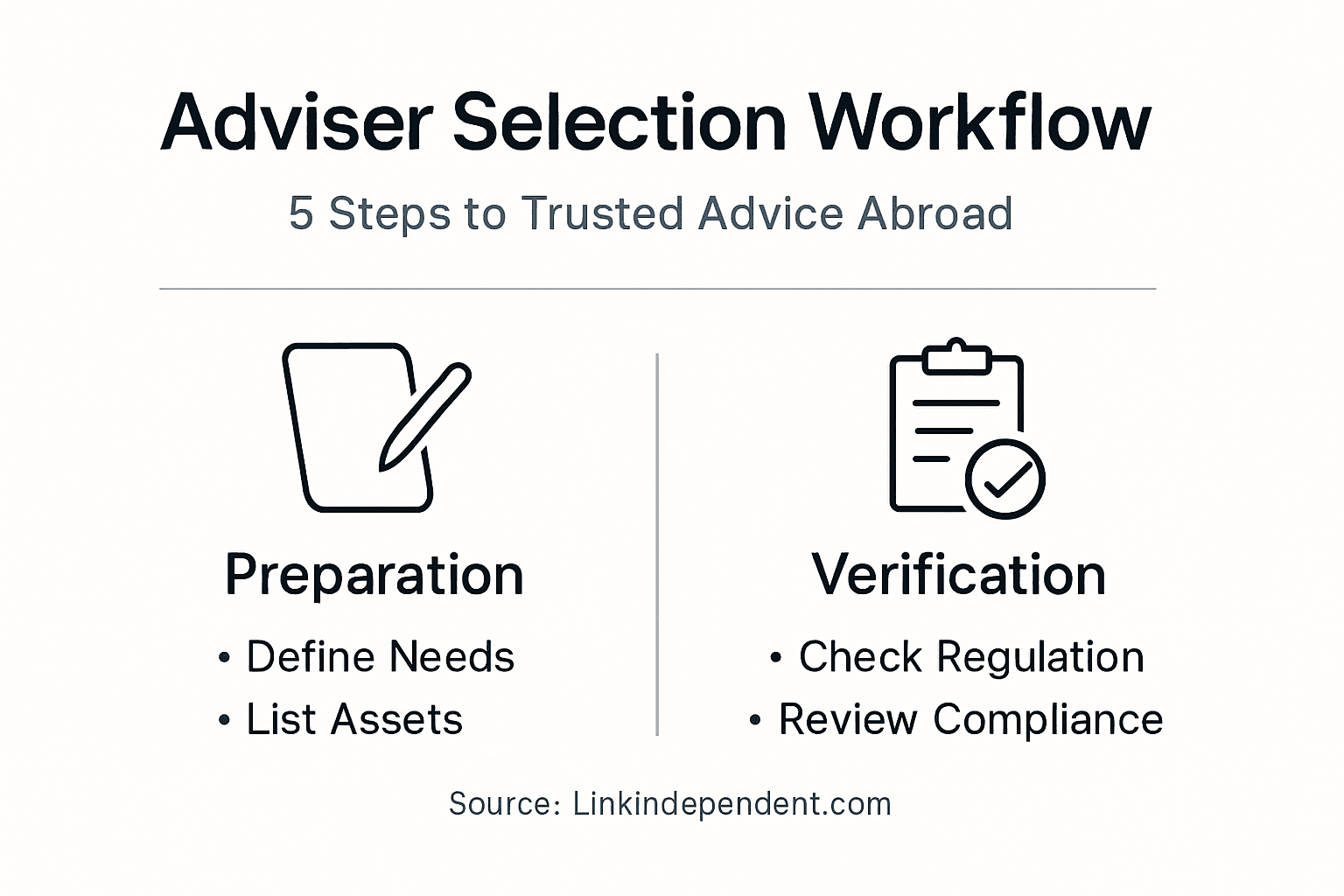
1. Define your financial needs first | Understand your financial situation across two countries to determine precisely what assistance you require from a cross-border adviser. |
2. Research regulated advisers | Ensure the advisers you consider are properly licensed in your target country to guarantee compliance with local financial regulations. |
3. Validate advisers’ compliance thoroughly | Assess advisers’ credentials, how they manage client money, and their adherence to compliance frameworks to safeguard your interests. |
4. Prepare for consultations effectively | Bring necessary documents and have clear questions prepared to gauge if the adviser understands your unique circumstances as an expat. |
5. Assess transparency and fit before commitment | Compare advisers’ proposals for clarity on fees and services, ensuring they genuinely prioritise your financial needs and can coordinate efficiently. |
Step 1: Define financial needs and cross-border requirements
Before you start searching for an adviser abroad, you need to understand exactly what you need. This isn’t about guessing—it’s about mapping your financial life across two countries so you know precisely what help to ask for.
Your financial picture as an American moving to France or Portugal is unique. You’re juggling things most people never consider: a US tax filing obligation that doesn’t disappear when you leave, retirement accounts back home, possibly rental income from property in the States, and new financial responsibilities in your destination country.
Start by listing your financial priorities:
Investment management: Do you need someone to help you manage existing portfolios across both countries?
Retirement planning: How will your 401(k) or pension work once you’re abroad? What happens to your Social Security?
Cross-border tax compliance: You’ll file US taxes for life (thanks, FATCA), but you also need to understand how your income is taxed in France or Portugal.
Mortgages or property: Are you buying property in your new country? Do you need financing advice?
Wealth structuring: Should your assets be held differently now that you’re resident elsewhere?
Many American expats overlook one critical reality: regulatory requirements for cross-border advisers mean your adviser must have proper credentials to serve you legally. When choosing cross-border financial experts, verify they’re licensed to advise clients in both your home country and your new residence.
Next, identify your situation. Are you a higher net-worth individual needing comprehensive wealth planning? Self-employed with complex tax implications? Someone with modest savings wanting straightforward tax guidance? Your circumstances determine what type of adviser you actually need—and what qualifications matter most.
Write down the approximate size of assets you want to manage. Write down your major concerns. Write down any existing relationships with advisers back home that might need to be coordinated. Be specific about timelines too: are you moving in three months or a year? That affects urgency.
Here is a summary of the different types of advisers and which circumstances they are most suited to:
Adviser Type | Best For | Typical Services |
Wealth Planner | High-net-worth expats | Comprehensive wealth, tax, legacy planning |
Tax Specialist | Self-employed, complex income | Dual tax filing, tax structuring advice |
Investment Manager | Ongoing investment needs | Portfolio management, cross-border asset allocation |
Mortgage Broker | Property purchase abroad | Local mortgages, cross-country finance options |
Generalist Adviser | Modest savings, simple needs | Basic compliance, straightforward advice |
You can’t find the right adviser until you know what problem you’re solving. Clarity here saves months of conversations with the wrong professionals.
Pro tip: Create a simple spreadsheet listing your assets (retirement accounts, investments, property, business income) and their current locations—this becomes your reference document when meeting advisers and helps them understand your complexity immediately.
Step 2: Research regulated advisers in target countries
Now that you know what you need, it’s time to find advisers who are actually qualified to help you. This means going beyond Google searches and recommendations from friends—you need advisers who are properly regulated and licensed in your target country.
Regulation matters because it protects you. An adviser operating legally must follow strict rules about how they manage your money, what they disclose, and how they handle complaints. When advisers work across borders, effective cross-border regulation requires proper supervision to ensure investor protection in multiple jurisdictions.
Start your research by checking official regulatory databases in France and Portugal. Each country has its own financial regulator:
France: The Autorité des marchés financiers (AMF) maintains a public register of authorised advisers.
Portugal: The Comissão do Mercado de Valores Mobiliários (CMVM) and Banco de Portugal oversee financial services.
Cross-border credentials: Look for advisers with MiFID II authorisation, which allows them to serve European Economic Area clients legally.
When you find a candidate, verify their credentials directly on the regulator’s website. Don’t rely on what’s written on their website alone—check the official registry yourself. Search for their firm name and individual adviser credentials if they’re required to be licensed personally.
Beyond regulatory status, regulated advisers offer key benefits that unregulated ones cannot. They’re required to carry professional indemnity insurance, follow conflict-of-interest rules, and maintain client asset protection.
Also check what specific licenses they hold. A wealth management adviser needs different credentials than a mortgage broker. Someone advising on US tax matters should understand both American and European tax law—look for relevant certifications or experience.
Regulation isn’t bureaucratic red tape—it’s the mechanism that forces advisers to put your interests first and backs it up with legal consequences if they don’t.
Pro tip: Keep a simple spreadsheet recording each adviser you research: their name, firm, regulatory status (with the registry link), specific services offered, and any certifications or relevant experience. This makes comparison straightforward and ensures you don’t accidentally contact unregulated advisers.
Step 3: Validate advisers’ credentials and compliance
You’ve found advisers who appear regulated. Now you need to dig deeper and verify they’re actually compliant with the rules that protect you. This step separates the genuinely trustworthy advisers from those cutting corners.

Start by asking direct questions about their compliance framework. How do they handle client money? What professional indemnity insurance do they carry? Do they have a formal complaints process? A legitimate adviser will answer these questions without hesitation.
Verify their specific credentials and licences:
Check individual adviser registrations: Not just the firm, but the person advising you should be individually licensed if required in that jurisdiction.
Confirm product authorisation: Ask which investment products and services they’re authorised to recommend. Advisers promoting unregulated overseas products face serious legal liabilities.
Validate tax residency status: Ensure they understand your specific tax position as an American expat and comply with relevant tax regulations in both countries.
Review their compliance record: Check if the regulator has issued any warnings, sanctions, or disciplinary actions against them.
Ask for references from other expat clients they’ve advised. Someone helping American citizens abroad should have experience with cross-border tax and investment issues specific to your situation. Don’t just take their word for it—contact those references and ask about their experience.
Request their fee structure in writing. Compliance frameworks require transparency around how they’re paid, whether they earn commissions, and any potential conflicts of interest. Hidden fees or unclear pricing are warning signs.
Also check their professional memberships. Membership in bodies like the Chartered Institute for Securities and Investment (CISI) or equivalent European bodies indicates commitment to standards beyond the legal minimum.
An adviser who’s vague about compliance is signalling they might cut corners when it matters—during a market downturn or tax audit.
Pro tip: Request a written summary of their compliance certifications, licences, and regulatory status before your first paid consultation. Ask them to confirm in writing which specific services they’re authorised to provide in France or Portugal, and keep this document for your records.
Step 4: Arrange consultations for tailored advice
You’ve identified and vetted potential advisers. Now comes the crucial step of actually meeting them to determine if they’re the right fit for your situation. A good consultation reveals whether an adviser truly understands your needs or is just trying to sell you products.
Book initial consultations with at least two or three advisers. This gives you the chance to compare approaches, personalities, and whether they genuinely listen to your circumstances. Most regulated advisers offer free or low-cost initial consultations—if they don’t, that’s a warning sign.
Prepare for your consultations by gathering the documents you created earlier:
Your asset spreadsheet listing everything you own and where it’s located
A written summary of your financial goals and concerns
Questions about their experience with American expats specifically
Details about any existing advisers or investments back in the United States
Your timeline for moving and making financial decisions
During the consultation, notice how the adviser responds. Do they ask thoughtful questions about your situation, or do they immediately push specific products? Tailored financial advice requires advisers to understand your unique position as an American relocating to Europe.
Ask specific questions that reveal their expertise. How do they handle US citizens abroad? What’s their experience with FATCA reporting requirements? Can they coordinate with advisers back in America? Do they understand French or Portuguese tax residency rules? Their answers should be detailed, not vague.
Pay attention to communication style. Will they explain things in language you understand, or do they hide behind jargon? Will they be accessible by email and phone when you need them? Cross-border financial decisions often need quick responses when tax deadlines approach or market changes affect your plans.
After each consultation, take notes on your impressions. Compare fees, services offered, responsiveness, and whether you felt heard. Trust your instincts—if an adviser makes you uncomfortable, move on.
The right adviser isn’t necessarily the cheapest or the most prestigious. It’s someone who listens, explains clearly, and treats your specific situation as complex and worthy of careful attention.
Pro tip: Before committing to any adviser, ask for a written proposal outlining their services, fee structure, and how they’ll coordinate with your existing advisers in America. Request a timeline for implementing any recommendations. This prevents surprises and gives you a reference point if disputes arise later.
Step 5: Confirm adviser suitability and transparency
After your consultations, you need to make a final assessment. Does the adviser genuinely suit your situation, and are they completely transparent about how they operate? This is where you separate the advisers who truly have your interests at heart from those who don’t.
Start by reviewing the written proposals you requested. Compare them side by side. Look for clarity in how fees are structured, what services are included, and what happens if circumstances change. Vague proposals are a red flag—legitimate advisers explain everything in writing.
Check these key transparency indicators:
The following table compares how fee structures and transparency impact your experience with a financial adviser:
Fee Structure | Adviser Transparency | Client Impact |
Flat, upfront | Full disclosure, written proposals | Predictable costs, clear expectations |
Asset-based (%) | Explains all commissions | Aligned incentives, possible conflicts |
Hourly rate | States rates and extras | Pay only for time needed |
Hidden costs | Avoids detailed answers | Risk of surprises, less trust |
Fee structure: Are fees clearly stated? Do they charge flat fees, hourly rates, or percentage of assets under management? Are there any hidden costs or commissions?
Conflict of interest disclosures: Has the adviser disclosed any potential conflicts? For example, do they earn commissions from recommending specific products?
Service scope: What exactly will they do for you? Will they prepare your US tax return, coordinate with Portuguese authorities, or both?
Communication plan: How often will you hear from them? What’s their response time for urgent matters?
What transparency in advising means is that an adviser voluntarily explains everything—not just what’s legally required, but what helps you understand their approach fully.
Now assess fit. Did the adviser ask insightful questions about your situation during the consultation? Do they have genuine experience with American expats, or are they just pretending? Can they coordinate across borders effectively? Consider whether you felt comfortable, respected, and understood.
Be especially cautious of advisers who pressure you to decide quickly. Phrases like “this offer expires” or “we need your decision by Friday” are manipulation tactics. A good adviser gives you time to think and compare.
Check references from their other expat clients one more time. Ask about their follow-up experience, not just the initial meeting. Do advisers stay engaged, or do they disappear after the first transaction?
Transparency isn’t just about numbers and fees. It’s about an adviser treating you like an intelligent partner, not a commission opportunity.
Pro tip: Ask each adviser directly: “If I hired you, what would you do in the first 90 days?” Their answer reveals whether they’ll take time to understand your situation comprehensively or rush into recommendations. Write down their response and compare—good answers show thoughtful planning.
Find Your Trusted Cross-Border Adviser with Confidence
Navigating the complex process of selecting regulated financial advisers abroad can feel overwhelming, especially with the need to verify credentials, ensure compliance, and receive truly tailored advice as highlighted in the article “Workflow for Selecting Trusted Advisers Abroad”. Whether you are an American moving to France, Portugal, or beyond, managing investments, cross-border taxes, or retirement accounts requires advisers who understand your unique situation and hold proper authorisations.
[

At Linkindependent.com, we simplify this process by connecting you to verified financial professionals who meet strict regulatory standards. Our platform prioritises transparency, independence, and personalised matching so you can avoid the guesswork and find advisers with clear fee structures and proven expertise in cross-border financial planning. Start by defining your needs, then let us match you to experts who truly understand the challenges faced by American expats. Don’t let uncertainty delay your financial security overseas. Visit Linkindependent.com today and take the first step towards confident, compliant financial advice tailored just for you.
Frequently Asked Questions
What should I consider when defining my financial needs for selecting advisers abroad?
Before selecting advisers abroad, identify your financial needs by listing your priorities such as investment management, tax compliance, and retirement planning. Create a comprehensive overview of your financial situation to help an adviser understand your specific requirements.
How do I find regulated advisers in my target country?
To find regulated advisers, research official regulatory databases to ensure they are licensed in the country you are moving to. Look for their registration details online and verify their credentials against the regulatory body’s public records.
What questions should I ask during the consultation with a potential adviser?
During your consultation, ask about their experience with cross-border financial issues and how they handle regulatory compliance. Prepare specific questions related to your financial circumstances to gauge their understanding and approach to your unique needs.
How can I validate an adviser’s credentials and compliance?
Validate an adviser’s credentials by checking their individual registrations and ensuring they are authorised to provide the services you require. Inquire about their compliance framework and request documentation of their professional indemnity insurance and complaints process.
What factors should I compare when evaluating advisers?
When evaluating advisers, compare their fee structures, transparency in service offerings, and their approach to communication. Document your findings in a simple spreadsheet to easily compare how each adviser’s proposal aligns with your financial goals and needs.
Recommended