

Why Diversify Global Investments for U.S. Expats
- Website Manager
- Feb 3
- 8 min read

Moving from the United States to Portugal invites a new set of financial decisions that often feel daunting for American expatriates. Making sense of global investment options and tax planning across borders becomes crucial, especially with unfamiliar rules and fluctuating markets. By embracing geographic diversification, you protect your retirement savings from localised risks and turn diverse international opportunities into long-term gains. This guide reveals how careful investment strategies and informed tax choices help American expatriates secure resilient, compliant, and tax-efficient portfolios for a confident life abroad.
Table of Contents
Key Takeaways
Point | Details |
Global Diversification | U.S. expatriates should strategically diversify investments across international markets to reduce risks and enhance returns. |
Asset Types | Effective diversification involves various asset classes, including stocks, bonds, real estate, and commodities. |
Currency and Tax Management | It is crucial for expatriates to develop strategies for managing currency risks and adhering to international tax regulations. |
Retirement Planning | A comprehensive approach to retirement planning must consider multiple jurisdictions and strategic management of assets. |
Global investment diversification explained
Global investment diversification is not just a financial strategy—it’s a critical risk management approach for U.S. expatriates seeking to protect and grow their wealth across international markets. By spreading investments across different geographical regions, asset classes, and economic sectors, expatriates can significantly reduce portfolio volatility and create more stable long-term returns.
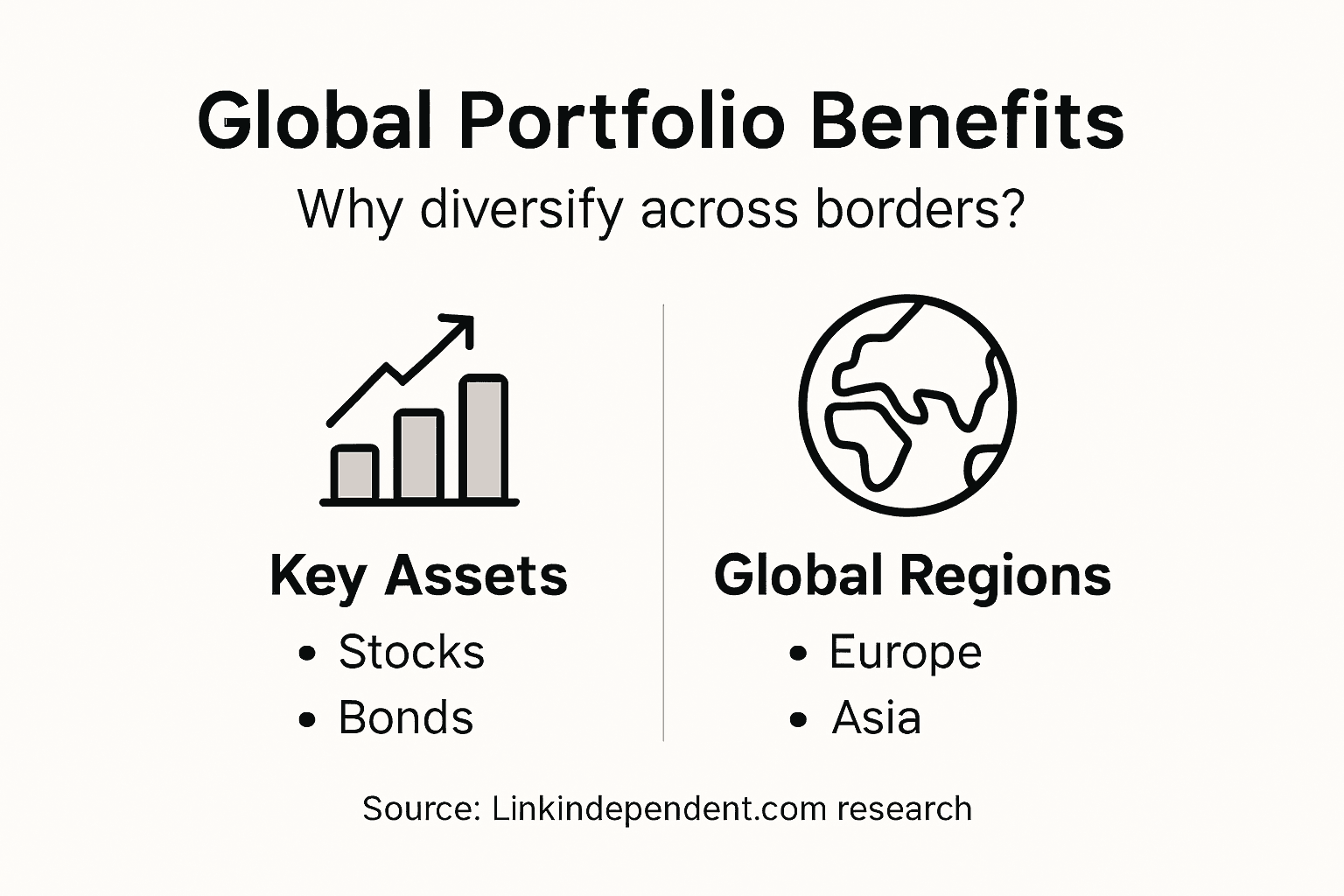
The core principle of global diversification involves strategically allocating investments to minimise risk and capitalise on opportunities beyond traditional domestic markets. This approach helps U.S. expats mitigate potential economic downturns in any single country or region. Effective diversification typically involves:
Investing across multiple international stock markets
Including diverse asset types like stocks, bonds, real estate, and commodities
Considering emerging and developed market opportunities
Balancing currency exposure to reduce exchange rate risks
Global investment strategies require careful planning and understanding of international financial landscapes. Each investment destination presents unique economic conditions, regulatory environments, and growth potential that demand thorough research and expert guidance.
By embracing a globally diversified portfolio, U.S. expatriates can potentially access higher returns while simultaneously reducing overall investment risk. The key is maintaining a balanced approach that considers personal risk tolerance, investment goals, and the complex international financial ecosystem.
Pro tip: Consult a cross-border financial adviser specialising in expatriate investments to develop a personalised global diversification strategy tailored to your specific financial circumstances and objectives.
Types of assets and geographic diversification
Geographic diversification represents a sophisticated investment strategy that enables U.S. expatriates to spread financial risks across multiple international markets and asset classes. Geographic diversification strategies provide sophisticated investors with opportunities to mitigate economic volatility and access global growth potential.
The primary asset types for effective diversification include:
Stocks: International and emerging market equities
Bonds: Government and corporate debt instruments from various countries
Real Estate: Global REITs and property investments
Commodities: Precious metals, agricultural products, and energy resources
Cash Equivalents: Money market funds and short-term international securities
Each asset class offers unique advantages and helps balance portfolio risk. Emerging markets might provide higher growth potential, while developed markets offer more stability. Currency diversification further enhances risk management by protecting against localised economic fluctuations.
For U.S. expatriates, selecting the right asset type involves weighing both advantage and risk profile:
Asset Type | Main Advantage | Typical Risk Level |
International Stocks | Access to diverse growth markets | Moderate to High |
Foreign Bonds | Stable income across borders | Low to Moderate |
Global Real Estate | Inflation protection and capital appreciation | Moderate |
Commodities | Hedge against market volatility | High |
Cash Equivalents | Preserve capital, ensure liquidity | Very Low |
Successful geographic diversification requires careful analysis of economic cycles, political stability, and regulatory environments across different regions. Investors must consider factors like currency exchange rates, tax implications, and potential geopolitical risks when constructing a globally distributed investment portfolio.

Pro tip: Regularly review and rebalance your international investment portfolio to maintain optimal asset allocation and respond to changing global economic conditions.
Managing currency and market risks abroad
U.S. expatriates investing globally must develop robust strategies for managing complex currency and market risks that can significantly impact investment returns. Currency management techniques are essential for protecting wealth across international markets and mitigating potential financial volatility.
Key strategies for effective currency risk management include:
Hedging: Using financial instruments to offset potential exchange rate losses
Diversification: Spreading investments across multiple currencies and markets
Active Management: Continuously monitoring and adjusting currency exposure
Derivative Instruments: Employing forwards, options, and currency swaps
Regular Assessment: Analysing economic indicators and market trends
Foreign exchange markets present unique challenges for international investors. Fluctuations in currency values can erode investment gains, making it crucial to understand the intricate dynamics of global financial markets. Sophisticated investors often employ complex strategies that balance risk mitigation with potential growth opportunities.
Currency risk management is not about eliminating all risk, but about creating a balanced approach that protects your investment portfolio while maintaining flexibility for potential market opportunities.
Global financial planning steps can help expatriates develop a comprehensive approach to managing international investment risks. This involves understanding local market regulations, tax implications, and potential geopolitical factors that might impact currency valuations.
Pro tip: Consider consulting a cross-border financial specialist who understands the nuanced challenges of international investment and can provide personalised strategies for managing currency risks.
Tax efficiency and regulatory considerations
Navigating the complex landscape of international taxation requires U.S. expatriates to develop sophisticated strategies that optimise financial efficiency while ensuring full compliance. Tax and regulatory frameworks present intricate challenges that demand careful understanding and proactive management.
Key regulatory and tax considerations for U.S. expatriate investors include:
International Tax Treaties: Understanding bilateral agreements to prevent double taxation
FATCA Reporting: Compliance with Foreign Account Tax Compliance Act requirements
Income Sourcing Rules: Distinguishing between domestic and foreign-sourced income
Withholding Tax Obligations: Managing tax liabilities across different jurisdictions
Reporting Thresholds: Tracking financial account disclosure requirements
The complexity of cross-border investments necessitates a nuanced approach to financial planning. Different countries maintain unique regulatory environments, making it crucial for investors to stay informed about changing legislation and potential tax implications.
Effective tax planning is not about avoiding taxes, but strategically managing your global financial exposure to minimise unnecessary liabilities while maintaining full legal compliance.
Financial regulation insights can help expatriates navigate the intricate world of international investment compliance. Professional guidance becomes essential in understanding the subtle nuances of global tax strategies and regulatory requirements.
Pro tip: Engage a cross-border tax specialist who understands both U.S. and international tax regulations to develop a comprehensive strategy that optimises your global investment portfolio.
Common pitfalls for expatriate investors
U.S. expatriate investors face numerous complex challenges that can significantly impact their financial strategies and long-term wealth preservation. Common investment mistakes can derail even the most carefully planned international financial portfolios, making comprehensive understanding crucial for success.
Key pitfalls that U.S. expats must carefully navigate include:
Home Country Bias: Overconcentrating investments in familiar markets
Currency Risk: Neglecting exchange rate fluctuations
Tax Compliance: Misunderstanding international reporting requirements
Broker Restrictions: Facing limitations on non-U.S. resident investments
Repatriation Challenges: Creating illiquid or costly investment structures
Navigating these challenges requires a sophisticated approach to global investment management. Each potential pitfall represents a significant risk that can erode investment returns and create unexpected financial complications for expatriates seeking to grow and protect their wealth across international boundaries.
Below is a summary of common expatriate investment pitfalls and recommended best practices:
Common Pitfall | Why It’s Harmful | Mitigation Strategy |
Home Country Bias | Reduces global opportunities | Allocate broadly across regions |
Currency Mismanagement | Erodes investment returns | Use hedging and diverse currencies |
Tax Non-Compliance | Incurs penalties and losses | Follow expert tax advice |
Broker Restrictions | Limits investment options | Use specialised expat brokers |
Repatriation Issues | Causes liquidity problems | Choose flexible account structures |
Investment success for expatriates is not about avoiding all risks, but strategically managing them through informed, proactive financial planning.
Cross-border investment strategies become essential in mitigating these complex challenges. Professional guidance can help expatriate investors develop nuanced approaches that address the unique complexities of international financial management.
Pro tip: Conduct an annual comprehensive review of your international investment portfolio with a specialist who understands both U.S. and international financial regulations to identify and address potential compliance and strategic risks.
Optimising retirement planning across borders
Retirement planning for U.S. expatriates demands a sophisticated, multi-jurisdictional approach that transcends traditional domestic investment strategies. Retirement planning strategies must navigate complex international financial landscapes to preserve long-term wealth and secure financial stability.
Key considerations for cross-border retirement planning include:
Tax Treaty Understanding: Navigating bilateral tax agreements
Currency Diversification: Protecting retirement savings from exchange rate volatility
Retirement Account Management: Maintaining U.S. retirement vehicles while living abroad
Social Security Coordination: Understanding international claiming options
Pension Transfer Strategies: Evaluating cross-border retirement fund mechanisms
Successful expatriate retirement planning requires a holistic approach that considers multiple financial jurisdictions, regulatory environments, and long-term personal objectives. Sophisticated investors must balance complex compliance requirements with strategic investment opportunities across different geographic regions.
Effective retirement planning is not about rigid adherence to single-country strategies, but creating flexible, adaptable financial frameworks that evolve with your global lifestyle.
Global wealth planning workflows become essential in developing comprehensive retirement strategies that protect and grow wealth across international boundaries.
Pro tip: Consult a cross-border financial specialist annually to review and recalibrate your international retirement strategy, ensuring optimal tax efficiency and compliance with evolving global regulations.
Secure Your Global Investment Future with Trusted Cross-Border Advisers
Managing a globally diversified portfolio as a U.S. expatriate presents complex challenges such as currency risk, tax compliance, and navigating multiple regulatory landscapes. This article highlights the importance of strategic global diversification to protect and grow your wealth across borders while avoiding common pitfalls like home country bias and repatriation issues. You need tailored financial expertise that understands these specific international hurdles and can help you optimise your investments, retirement planning, and tax efficiency.

Discover how Linkindependent.com simplifies your search for verified, regulated financial professionals specialising in cross-border wealth planning. Whether you want guidance on international asset allocation, managing currency exposure or ensuring tax compliance, our platform connects you with advisers who offer personalised strategies tailored to U.S. expatriates living in Europe and beyond. Take control of your global financial future today by finding the right financial adviser who understands your unique needs. Act now to protect and maximise your international investments with expert support that makes a difference.
Frequently Asked Questions
What are the benefits of global investment diversification for U.S. expats?
Global investment diversification helps U.S. expatriates reduce portfolio volatility, manage risk effectively, and access opportunities in various international markets to enhance long-term returns.
How can U.S. expats manage currency risks in global investments?
U.S. expats can manage currency risks by employing strategies such as hedging, diversifying investments across multiple currencies, and actively monitoring currency exposure to mitigate potential losses.
What types of assets should U.S. expatriates consider for diversification?
Expats should consider a mix of international stocks, foreign bonds, global real estate, commodities, and cash equivalents to create a balanced and diversified investment portfolio.
Why is it important for U.S. expatriates to understand international tax regulations?
Understanding international tax regulations is crucial for U.S. expatriates to ensure compliance, avoid penalties, and optimise their financial efficiency regarding taxes on their global investment returns.
Recommended
Comments