

Workflow for Global Wealth Planning: Step-by-Step Success
- Dec 20, 2025
- 7 min read

Most british investors underestimate just how complex cross-border wealth management can become. With over 60 percent of global investors reporting challenges in navigating shifting regulations and unpredictable currency movements, overlooking international strategy puts your long-term security at risk. This practical guide cuts through the confusion, providing clear steps for british individuals aiming to protect, grow, and streamline their wealth across borders with confidence.
Table of Contents
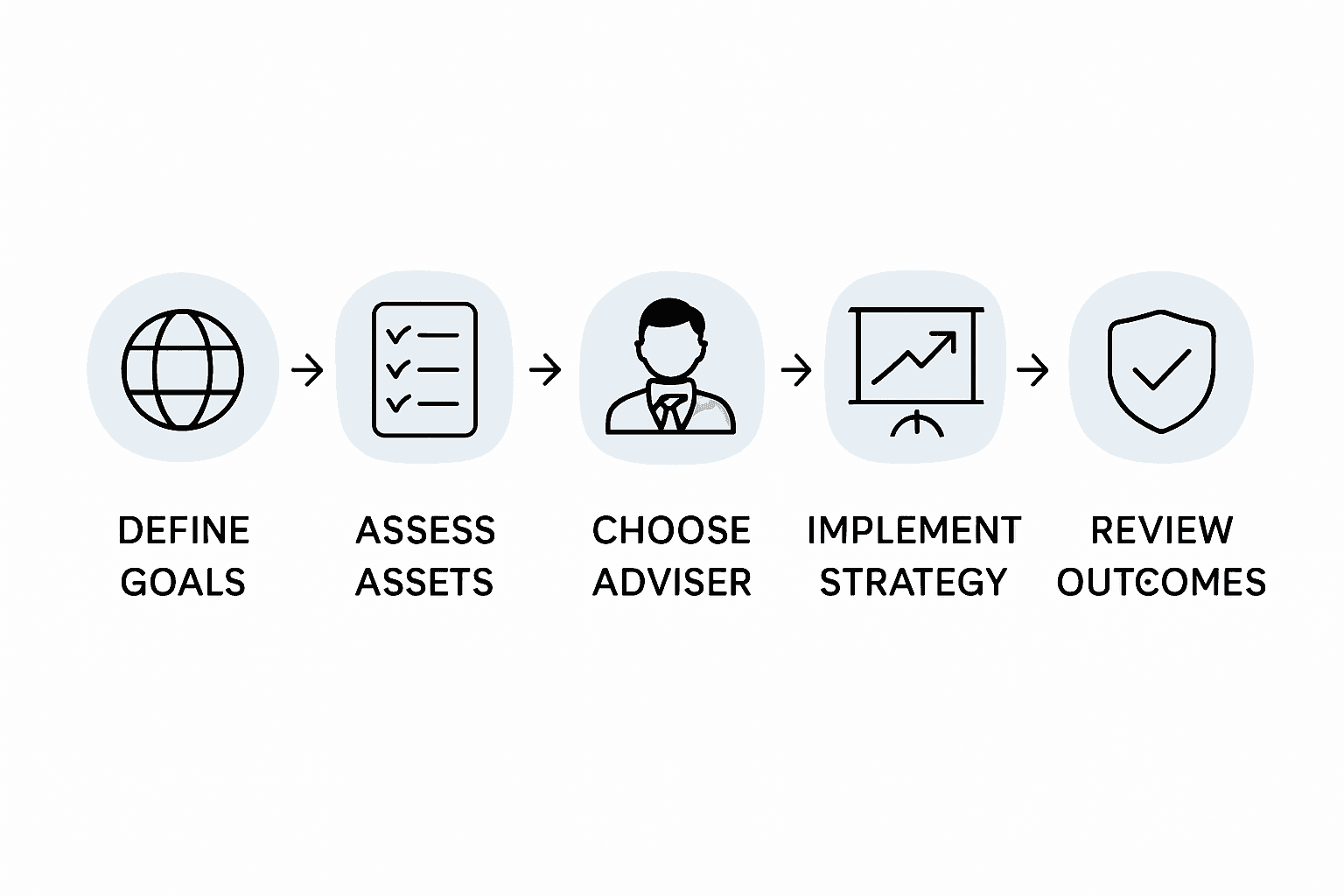
Quick Summary
Key Insight | Explanation |
1. Define clear financial goals | Establish specific cross-border financial objectives by evaluating assets, income, and liabilities across jurisdictions. |
2. Assess global legal structures | Create an inventory of international assets and understand their governing laws to optimise management and compliance. |
3. Engage qualified financial advisers | Work with regulated advisers who specialise in cross-border wealth management and have relevant experience with your needs. |
4. Implement diversified strategies | Develop and execute a comprehensive strategy that addresses investment, tax efficiency, and compliance in multiple jurisdictions. |
5. Regularly review compliance | Conduct biannual audits of your financial strategy to ensure legal compliance and adapt to regulatory changes effectively. |
Step 1: Define cross-border financial goals
Defining cross-border financial goals requires a strategic approach that considers the complexities of managing wealth across different jurisdictions. Understanding the nuanced landscape of international finance is critical to creating a robust wealth planning strategy.
When establishing your global financial objectives, start by comprehensively assessing your current financial position. This involves mapping out your assets, income streams, and potential liabilities across various countries. Global Financial Planning Essentials programs emphasise the importance of understanding political, regulatory, and economic uncertainties that can significantly impact your wealth management strategy. Consider factors such as tax regulations, currency exchange risks, and potential geopolitical shifts that might influence your financial landscape.
Key elements to evaluate include retirement planning, investment diversification, wealth preservation, and potential international relocation scenarios. Work closely with financial advisers who specialise in cross-border wealth management to develop a nuanced strategy that adapts to changing global conditions. By taking a proactive and holistic approach, you can create financial goals that are resilient, flexible, and aligned with your long term objectives.
Professional tip: Always maintain a dynamic financial plan that can be adjusted as your personal circumstances and global economic conditions evolve.
Here is a summary of key factors influencing cross-border financial planning:
Consideration | Description | Potential Impact |
Tax Regulations | Differences in international tax rules | Affects total wealth retention |
Currency Exchange Risk | Fluctuations in currency values | Can erode investment returns |
Political Stability | Varying political climates in each country | May threaten wealth security |
Regulatory Framework | Variation in local financial regulations | Influences investment options |
Geopolitical Shifts | Sudden changes affecting asset relocation | May require plan realignment |
Step 2: Assess global assets and legal structures
Assessing global assets and legal structures is a critical step in developing a comprehensive international wealth management strategy. This process involves a detailed examination of your financial portfolio and understanding the complex legal frameworks that govern your international holdings.
Research on high-net-worth households demonstrates the significance of strategic asset allocation and comprehensive risk management across diverse global markets. Begin by creating a comprehensive inventory of your assets including real estate, investment portfolios, retirement accounts, business interests, and intellectual property across different countries. Evaluate the legal structures surrounding these assets such as trusts, corporate entities, and inheritance frameworks. Pay close attention to tax implications, regulatory requirements, and potential cross-border compliance challenges.

Each jurisdiction presents unique legal and financial considerations. Consider engaging international legal and financial experts who specialise in cross-border wealth management to help you navigate these complex landscapes. They can provide insights into optimal asset structuring, help minimise tax liabilities, and ensure your wealth is protected under various international legal frameworks.
Professional tip: Document all international assets meticulously and review your asset structure annually to adapt to changing global financial regulations and personal circumstances.
Step 3: Select and engage regulated advisers
Selecting and engaging regulated financial advisers is a crucial step in creating a robust global wealth management strategy. This process requires careful consideration and strategic evaluation of professionals who can effectively navigate complex international financial landscapes.
The CFA Institute emphasises the importance of selecting regulated advisers to achieve personalised financial objectives across diverse global markets. When searching for the right adviser, prioritise professionals with demonstrable expertise in cross-border wealth management, international regulatory compliance, and a proven track record of serving clients with similar global financial profiles. Look for credentials such as chartered financial analyst certifications, membership in international professional bodies, and extensive experience working with multinational clients.
During your selection process, conduct thorough interviews to assess the adviser’s understanding of your specific financial goals, risk tolerance, and international investment strategies. Request comprehensive information about their regulatory registrations, professional background, fee structures, and approach to managing global assets. Verify their credentials with relevant financial regulatory authorities and seek recommendations from trusted professional networks. A truly effective global financial adviser should offer transparent communication, personalised strategy development, and a holistic approach to managing your international wealth.
Professional tip: Request detailed references and conduct background checks on potential advisers to ensure they have a consistent history of ethical and successful financial management.
Step 4: Implement international wealth strategies
Implementing international wealth strategies requires a sophisticated approach that balances global financial opportunities with personalised risk management. This critical phase transforms your comprehensive planning into actionable financial initiatives that protect and grow your cross-border assets.
Research on high-net-worth individuals highlights the importance of strategic asset diversification and targeted tax planning when developing international wealth strategies. Begin by creating a comprehensive implementation framework that addresses multiple dimensions including investment allocation, tax efficiency, legal structuring, and currency risk management. Work closely with your selected financial advisers to develop a nuanced strategy that considers the unique regulatory environments of each jurisdiction where you hold assets.
Careful execution involves systematically implementing your strategy across different financial instruments and geographical regions. This might include establishing international investment portfolios, creating tax-efficient trust structures, managing cross border pension transfers, and developing resilient investment mechanisms that can adapt to changing global economic conditions. Pay particular attention to compliance requirements, ensuring that all international financial activities adhere to local and international regulatory standards. Regular monitoring and periodic strategy reassessment will help you maintain flexibility and responsiveness in your global wealth management approach.
Professional tip: Create a detailed implementation timeline with specific milestones and quarterly review points to ensure your international wealth strategy remains aligned with your evolving financial objectives.
Step 5: Review compliance and optimise outcomes
Reviewing compliance and optimising outcomes represents the critical final stage of global wealth management where strategic planning transforms into tangible financial performance. This systematic evaluation ensures your international financial strategy remains robust resilient and aligned with your evolving objectives.
Professionals navigating multi jurisdictional financial environments recognise the intricate process of reviewing compliance to optimise financial outcomes across complex global markets. Conduct a comprehensive audit of your international financial structures by assessing regulatory adherence transaction efficiency tax implications and overall strategic alignment. This involves meticulously examining each financial instrument investment vehicle and cross border transaction to confirm they meet the regulatory requirements of all relevant jurisdictions.
The optimisation process requires a granular approach that balances legal compliance with financial efficiency. Engage your financial advisers in a detailed review of your existing strategies identifying potential areas for tax optimisation risk mitigation and structural improvement. Pay particular attention to changes in international financial regulations emerging market conditions and shifts in your personal financial landscape. This ongoing review mechanism allows you to proactively adjust your wealth management approach ensuring maximum financial performance while maintaining strict regulatory compliance.
Professional tip: Schedule biannual comprehensive compliance reviews with your international financial team to maintain proactive oversight and quickly adapt to changing regulatory environments.
The following table contrasts domestic and international wealth management challenges:
Aspect | Domestic Wealth Management | International Wealth Management |
Legal Complexity | Generally straightforward | Multiple jurisdictions, varied laws |
Tax Compliance | Single-country tax codes | Differing international tax requirements |
Adviser Selection | Localised standards | Global certification and experience |
Asset Diversification | National market focus | Broader, multi-region allocation |
Ongoing Review | Annual, predictable updates | Responsive to global regulatory changes |
Take Control of Your Global Wealth Planning Today
Managing cross-border finances can feel overwhelming due to complexities like tax regulations, currency risks, and selecting the right advisers. This article highlights the critical steps to define clear financial goals, assess your global assets, and engage regulated professionals who understand international compliance. If navigating international wealth strategies and ensuring regulatory adherence feels daunting, you are not alone.

Linkindependent.com offers a trusted solution to simplify this process by connecting you with verified, regulated financial advisers worldwide who specialise in cross-border wealth management. Enjoy personalised recommendations based on your unique needs, transparent fee structures, and full compliance with local authorities. Start your journey now by defining your goals and matching with experienced experts at Linkindependent. Secure your financial future with confidence and ease.
Frequently Asked Questions
What are the first steps in the workflow for Global Wealth Planning?
To begin the workflow, define your cross-border financial goals by assessing your current financial position. Create a comprehensive map of your assets, income streams, and potential liabilities to ensure robust planning.
How can I assess my global assets and legal structures effectively?
Start by creating an inventory of all your international assets and their respective legal structures. Pay attention to tax implications and regulatory requirements in each jurisdiction to ensure compliance and optimal asset management.
What criteria should I use to select regulated financial advisers for international wealth management?
When selecting advisers, prioritise those with expertise in cross-border wealth management and relevant certifications. Conduct thorough interviews to evaluate their understanding of your financial goals and request information about their fee structures.
How do I implement international wealth strategies effectively?
Create a detailed implementation framework addressing investment allocation and tax efficiency. Work closely with your financial advisers to establish strategies that are compliant with the regulations of each jurisdiction and monitor them regularly for alignment with your goals.
What should I consider for compliance and optimising outcomes in global wealth management?
Review your financial structures systematically to ensure they meet regulatory requirements across jurisdictions. Engage your advisers in periodic audits to identify areas for tax optimisation and structural improvement, maintaining compliance at all times.
Recommended
Comments