

Why Verify Financial Professionals for US Expats
- Feb 8
- 9 min read

Moving from the United States to Europe introduces challenges that go far beyond finding a new home or adapting to local life. For many American expatriates, financial professionals become indispensable partners for cross-border tax planning and investment management when faced with the maze of international regulations. Understanding the value of expert guidance—beyond just investments—empowers you to make confident decisions, protect your assets, and secure your financial future abroad.
Table of Contents
Key Takeaways
Point | Details |
Understanding Roles | Financial professionals encompass various roles, each providing specialised services tailored to diverse financial needs. |
Combatting Misconceptions | Financial literacy is essential for everyone, not just the wealthy; seeking professional advice can significantly improve financial health. |
Importance of Verification | Always verify credentials and regulatory compliance of financial professionals to avoid risks of fraud and legal complications. |
Fee Transparency Matters | Clear understanding of fee structures and fiduciary responsibilities is crucial for protecting your financial interests, especially as a US expat. |
Financial professionals—definition and common misconceptions
Financial professionals are expert practitioners who provide specialised guidance in money management, investment strategies, and financial planning across diverse personal and business contexts. These professionals range from financial advisers and wealth managers to accountants, tax specialists, and investment consultants who help individuals and organisations navigate complex financial landscapes.
The world of financial expertise encompasses multiple disciplines and specialisations. Financial professionals typically include:
Investment advisers who develop portfolio strategies
Tax consultants managing cross-border financial compliance
Wealth managers assisting high-net-worth individuals
Retirement planning specialists
Insurance and risk management experts
Misconceptions about financial professionals often stem from limited understanding of their roles and capabilities. Many people incorrectly assume that financial literacy is only for wealthy individuals or that financial advice is unnecessary for average earners.
Financial literacy is a foundational skill that helps individuals make informed financial decisions across all economic backgrounds.
These misconceptions can prevent people from seeking professional guidance that could significantly improve their financial well-being. Financial professionals do far more than simply managing investments—they provide strategic advice, help mitigate risks, create personalised financial plans, and offer ongoing support through complex economic transitions.
The following table highlights typical roles of financial professionals and the main misconceptions they face:
Role of Financial Professional | Unique Contribution | Common Misconception |
Investment Adviser | Tailors client portfolios for goals | Focuses only on the wealthy |
Tax Specialist | Ensures international tax compliance | Is unnecessary for average earners |
Wealth Manager | Supports holistic wealth preservation | Only provides investment products |
Retirement Planner | Secures long-term income sustainability | Deals only with pensions |
Insurance Expert | Structures risk mitigation plans | Sells products, not advice |
For United States expatriates, financial professionals become even more critical. They help navigate intricate international tax regulations, manage cross-border investments, and ensure compliance with both US and international financial requirements. Understanding the nuanced role of these experts can transform one’s approach to financial planning and wealth management.
Pro tip: Always verify a financial professional’s credentials, regulatory registrations, and specialisation before engaging their services.
Types of financial advisers serving US expats
US expatriates navigate a complex financial landscape that requires specialised professional guidance. Financial advisers provide personalised services tailored to the unique challenges of cross-border financial management, encompassing a diverse range of expertise and regulatory frameworks.
The primary types of financial advisers serving US expats include:
Registered Investment Advisers (RIAs): Offering comprehensive investment strategy and portfolio management
Tax Consultants: Specialising in international tax compliance and US expatriate tax regulations
Cross-Border Financial Planners: Providing holistic financial planning across multiple jurisdictions
International Wealth Managers: Managing complex international investment portfolios
Expatriate Insurance Specialists: Addressing unique insurance needs for Americans living abroad
Each adviser type serves a distinct function in supporting US expats. Financial planners range from comprehensive strategists to product-specific consultants, with their regulatory oversight varying based on specific credentials and services provided.
Successful financial management for US expats requires working with professionals who understand both US and local financial regulations.
The complexity of cross-border financial management means that US expatriates often require multiple specialist advisers to create a comprehensive financial strategy. These professionals must navigate intricate tax treaties, investment regulations, retirement planning considerations, and international banking requirements that differ significantly from domestic financial planning.
Choosing the right financial adviser involves understanding their specific expertise, regulatory credentials, and experience with US expatriate financial challenges. Professionals with specialised knowledge of international tax law, investment strategies, and cross-border financial compliance become invaluable partners in managing financial transitions and opportunities.
Pro tip: Always request detailed information about an adviser’s qualifications, international certifications, and specific experience working with US expatriate financial scenarios.
International regulations and cross-border compliance
US expatriates face a complex web of international financial regulations that demand meticulous compliance and strategic navigation. Foreign Account Tax Compliance Act (FATCA) mandates comprehensive reporting for US taxpayers maintaining financial assets abroad, representing a critical regulatory framework for cross-border financial management.
Key international regulatory requirements for US expats include:
Reporting Foreign Financial Accounts: Mandatory disclosure of offshore assets
Tax Treaty Compliance: Understanding bilateral tax agreements
International Banking Regulations: Navigating multiple jurisdictional financial rules
Investment Restriction Frameworks: Managing cross-border investment limitations
Pension and Retirement Account Regulations: Maintaining US retirement account eligibility
Financial reporting requirements for US persons become particularly complex when aggregate foreign account balances exceed $10,000, necessitating annual Foreign Bank Account Reports (FBAR) to ensure full transparency.
Cross-border financial compliance demands ongoing education and proactive strategic planning.
The intricate landscape of international financial regulations requires US expatriates to work closely with professionals who possess deep understanding of both US tax laws and local financial frameworks. These experts must continuously track evolving regulatory requirements, interpret complex international tax treaties, and provide strategic guidance to ensure full legal compliance.
Navigating these regulations involves more than simple documentation—it requires sophisticated financial planning that anticipates potential regulatory changes, manages potential tax liabilities, and protects the financial interests of US citizens operating across international boundaries. Successful compliance demands a comprehensive approach that integrates legal, tax, and financial expertise.
Pro tip: Maintain meticulous financial records and consult specialised cross-border financial professionals who understand both US and local regulatory environments.
Qualifications, licensing, and regulatory oversight
Financial professionals serving US expatriates must navigate a complex landscape of professional credentials and regulatory requirements. Professional designations require rigorous examinations and ethical standards, ensuring that advisers possess comprehensive knowledge and maintain high levels of professional competence.
Key qualifications and regulatory requirements include:
Recognised Professional Certifications:
Certified Financial Planner (CFP)
Chartered Financial Analyst (CFA)
Chartered Financial Consultant (ChFC)
Regulatory Bodies:
Financial Industry Regulatory Authority (FINRA)
Securities and Exchange Commission (SEC)
State-level regulatory agencies
Mandatory Compliance Requirements:
Fiduciary duty adherence
Continuous professional education
Regular compliance audits
Investment advisers must register with appropriate regulatory bodies, filing comprehensive documentation and demonstrating professional competency through standardised examinations and ongoing ethical compliance.
Professional credentials are not just certificates, but assurances of expertise and ethical commitment.
The registration process for financial professionals involves multiple layers of scrutiny, including background checks, qualification verifications, and ongoing monitoring. For US expatriates, this means selecting advisers who not only understand international financial landscapes but also maintain impeccable regulatory standards across different jurisdictions.
Understanding these qualifications helps expatriates make informed decisions, ensuring they work with professionals who possess the necessary expertise, legal authorisations, and commitment to maintaining the highest standards of financial advice and client protection.

Below is a summary table contrasting adviser qualifications and oversight bodies relevant for US expatriates:
Adviser Credential | Primary Regulatory Body | Oversight Focus |
CFP | Financial Industry Regulatory Authority (FINRA) | Ethical planning standards |
CFA | Securities and Exchange Commission (SEC) | Investment management |
ChFC | State-level agencies | Financial consultancy scope |
RIA Registration | Multiple, including SEC and State Agencies | Client asset protection |
Pro tip: Request and independently verify a financial professional’s credentials, regulatory registrations, and disciplinary history before establishing a working relationship.
Risks of unverified advisers and legal consequences
US expatriates face significant financial risks when working with unverified financial advisers, potentially exposing themselves to substantial legal and monetary consequences. Fraudsters increasingly use sophisticated impersonation tactics to mislead unsuspecting clients, making rigorous verification more critical than ever.
Potential risks associated with unverified financial advisers include:
Financial Fraud:
Unauthorized investment transactions
Misappropriation of client funds
Identity theft
Legal Complications:
Potential prosecution for fraudulent activities
Loss of investment capital
Challenges in legal recovery of funds
Regulatory Violations:
Breach of international financial regulations
Potential tax compliance issues
Compromised financial reporting
Misconduct among financial advisers is more prevalent than many realise, with statistical evidence suggesting significant risks to investors who fail to conduct thorough background checks.
Verification is not just a precaution—it is a fundamental protection mechanism for financial security.
The consequences of engaging with unverified advisers extend beyond immediate financial losses. US expatriates may face complex legal challenges in recovering funds, navigating international regulatory frameworks, and addressing potential tax implications resulting from unauthorized or fraudulent financial activities.
Understanding these risks requires a comprehensive approach to financial professional verification, including checking regulatory registrations, reviewing disciplinary histories, and confirming professional credentials across multiple jurisdictional platforms.
Pro tip: Always request and independently verify an adviser’s credentials through official regulatory databases before establishing any financial relationship.
Fee structures, transparency, and fiduciary responsibilities
US expatriates require comprehensive understanding of financial advisers’ fee structures and fiduciary responsibilities to protect their international financial interests. Investment advisers owe a fundamental fiduciary duty to act with utmost care, loyalty, honesty, and good faith for their clients, ensuring transparent and fair financial interactions.
Key aspects of fee structures and fiduciary responsibilities include:
Fee Transparency:
Upfront disclosure of all advisory charges
Detailed breakdown of service-related costs
Clear explanation of compensation models
Fiduciary Obligations:
Prioritising client’s financial interests
Avoiding conflicts of interest
Providing unbiased financial recommendations
Compensation Models:
Fee-only advisory services
Percentage-based asset management fees
Hybrid compensation structures
State regulators emphasise consistent fee disclosure across regulatory documents, ensuring clients understand the total cost of financial services.
Transparency in financial advisory fees is not just a recommendation—it’s a fundamental client protection mechanism.
For US expatriates, understanding fee structures becomes even more critical due to the complex international financial landscape. Different jurisdictions may have varying regulatory requirements, making it essential to work with advisers who provide comprehensive, transparent fee disclosures.
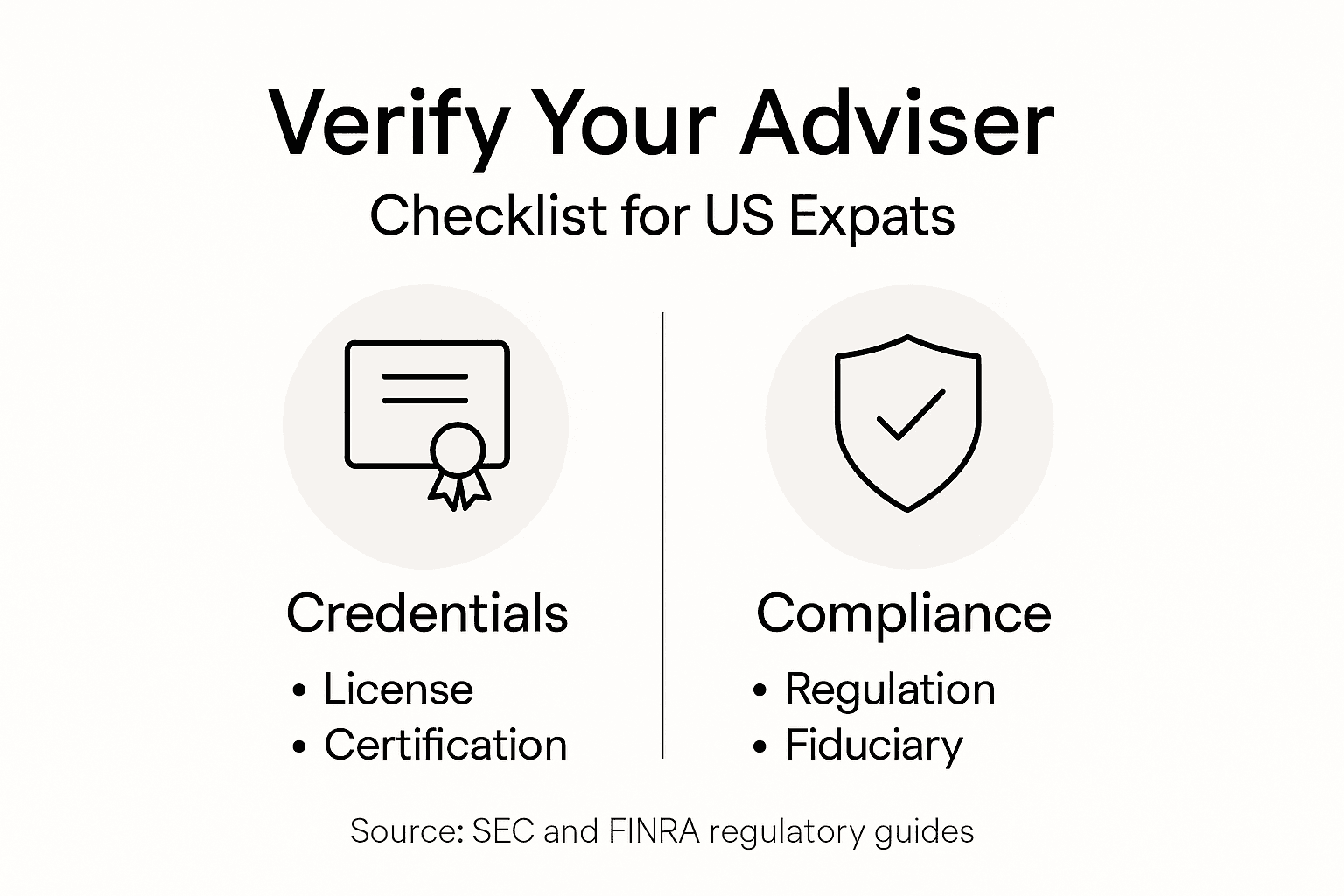
Beyond monetary considerations, fiduciary responsibilities encompass a holistic commitment to the client’s financial well-being. This includes providing tailored advice, managing potential conflicts of interest, and maintaining the highest standards of professional conduct across international financial environments.
Pro tip: Request a comprehensive, written fee schedule and detailed explanation of an adviser’s fiduciary obligations before establishing any financial relationship.
Protect Your Financial Future by Verifying Trusted US Expat Advisers
Navigating the complex world of international finance demands more than just knowledge – it requires partnering with verified, regulated financial professionals who truly understand the unique challenges faced by US expatriates. The risks of working with unverified advisers include financial fraud, legal complications, and non-compliance with international regulations. At Linkindependent, we simplify your search by connecting you with licensed experts specialising in cross-border taxation, US pensions, 401k management, and asset investments tailored for Americans living in Europe and beyond.

Don’t leave your financial future to chance. Discover how easy it is to find, verify, and consult with experienced cross-border financial advisers who prioritise transparency and fiduciary responsibility. Begin your journey today by visiting Linkindependent.com and experience a streamlined three-step process designed to protect your wealth and ensure compliance every step of the way. Secure trusted guidance now with Linkindependent before making your next financial move.
Frequently Asked Questions
Why is it important to verify financial professionals for US expatriates?
Verifying financial professionals is crucial for US expatriates to ensure they are working with qualified individuals who understand both US regulations and local financial laws. This helps mitigate risks of fraud and ensures compliance with complex international financial requirements.
What are the risks of working with unverified financial advisers?
Unverified financial advisers pose risks such as financial fraud, legal complications, and regulatory violations. Engaging with them can result in unauthorized transactions, potential loss of funds, and challenges in recovering investments due to non-compliance with laws.
What key qualifications should I look for in a financial professional?
Look for qualifications such as certified designations like Certified Financial Planner (CFP), Chartered Financial Analyst (CFA), and Chartered Financial Consultant (ChFC). These certifications indicate a professional’s expertise and commitment to ethical standards.
How can I ensure my financial advisor is adhering to fiduciary responsibilities?
You can ensure fiduciary adherence by requesting detailed disclosures of the adviser’s fee structures and compensation models. A fiduciary is obligated to act in the client’s best interests, so transparency in their financial practices is essential.
Recommended
Comments