

Why Verification Matters in Financial Advice Abroad
- Jan 16
- 6 min read

Nearly 45 percent of US expatriates in Europe struggle to find reliable financial advisers who understand both American and British regulatory standards. For retirees navigating cross-border tax, pension management, and estate planning, the risks of unverified advice can lead to costly mistakes or missed compliance. This guide outlines practical safeguards and proven verification steps to help you select professionals equipped to manage your assets and protect your future.
Table of Contents
Key Takeaways
Point | Details |
Importance of Verification | Always verify a financial adviser’s credentials to protect your investments and financial future. |
Regulatory Compliance is Crucial | Work with advisers who adhere to regulatory standards to ensure ethical practices and client protection. |
Risks of Unverified Advisers | Engaging unverified advisers can lead to substantial financial losses and poor investment outcomes. |
Cross-border Expertise Needed | Seek financial professionals with cross-border knowledge to navigate differing regulations effectively. |
Understanding verification in financial advice
Financial advice verification represents a critical safeguard for individuals seeking professional guidance, especially when managing investments or financial planning abroad. Financial literacy fundamentally depends on understanding the credentials and competence of financial professionals who guide crucial monetary decisions.
Verification involves a comprehensive assessment of a financial adviser’s professional credentials, regulatory compliance, and track record. This process ensures that advisers meet stringent professional standards, hold appropriate qualifications, and operate within legal frameworks designed to protect clients. Professional standards are essential for maintaining trust and delivering high-quality financial guidance across international boundaries.
The verification process typically includes multiple layers of scrutiny. Financial professionals must demonstrate academic qualifications, professional certifications, regulatory registrations, and a clean disciplinary record. Investors should look for advisers who are licensed by recognised financial authorities, have transparent fee structures, and can provide documented evidence of their expertise in cross-border financial management.
Pro tip: Always request and independently verify a potential financial adviser’s professional credentials before engaging their services, focusing on their regulatory registrations and professional memberships.
Regulatory standards and legal requirements
Regulatory standards play a crucial role in protecting investors and maintaining the integrity of financial advisory services across international boundaries. Global financial standards establish comprehensive frameworks that ensure financial advisers operate with transparency, accountability, and professional competence.
Financial regulators worldwide implement stringent requirements designed to protect investors from potential misconduct. These regulatory frameworks mandate that financial advisers maintain specific professional qualifications, undergo regular compliance checks, and adhere to ethical guidelines that prioritise client interests. Professional conduct standards are particularly critical, establishing clear expectations for adviser behaviour, disclosure of potential conflicts of interest, and maintaining the highest levels of professional integrity.
Key regulatory requirements typically include mandatory professional certifications, ongoing professional education, regular compliance audits, and transparent reporting mechanisms. Financial advisers must demonstrate not only technical competence but also a commitment to ethical practice, with regulations often requiring detailed documentation of investment recommendations, fee structures, and potential risk disclosures. These comprehensive standards help mitigate risks associated with cross-border financial advice and provide investors with a robust framework of protection.
Pro tip: Always request a comprehensive breakdown of an adviser’s regulatory credentials, including their primary licensing authority and most recent compliance audit results.
Key risks of unverified financial advisers
Financial adviser misconduct represents a significant threat to investors, particularly those navigating complex cross-border financial landscapes. Unverified advisers can expose individuals to substantial financial risks, ranging from poor investment strategies to outright fraudulent practices that can devastate personal wealth and retirement planning.
The potential dangers of working with unverified financial professionals are multifaceted. Misconduct among financial advisers can include unethical behaviours such as excessive trading, deliberate misrepresentation of investment risks, and concealment of potential conflicts of interest. These practices not only compromise individual financial security but also undermine the broader integrity of financial markets, creating systemic risks that can affect multiple investors.

Specific risks associated with unverified advisers include inappropriate investment recommendations, hidden fee structures, unauthorized trading, and potential misappropriation of funds. Investors may encounter advisers who prioritise their own commissions over client interests, leading to investment portfolios that are misaligned with personal financial goals, risk tolerances, and long-term objectives. Without proper verification, individuals have limited recourse when confronted with professional misconduct, potentially facing significant financial losses with minimal legal protection.
Pro tip: Request comprehensive documentation of an adviser’s professional credentials, including regulatory registrations, disciplinary history, and independent client references before engaging their services.
Cross-border compliance and US–Europe issues
Cross-border financial services encounter complex regulatory challenges that significantly impact US expatriates seeking financial advice in Europe. The intricate landscape of international financial regulations creates a maze of compliance requirements that can overwhelm investors attempting to manage their cross-border financial portfolios.
The fundamental challenge lies in the substantial regulatory differences between US and European financial systems. Regulatory cooperation between jurisdictions remains inconsistent, creating potential gaps in investor protection and compliance standards. US expatriates must navigate these complex environments, understanding that financial advice that meets US regulatory standards may not automatically comply with European regulatory frameworks.
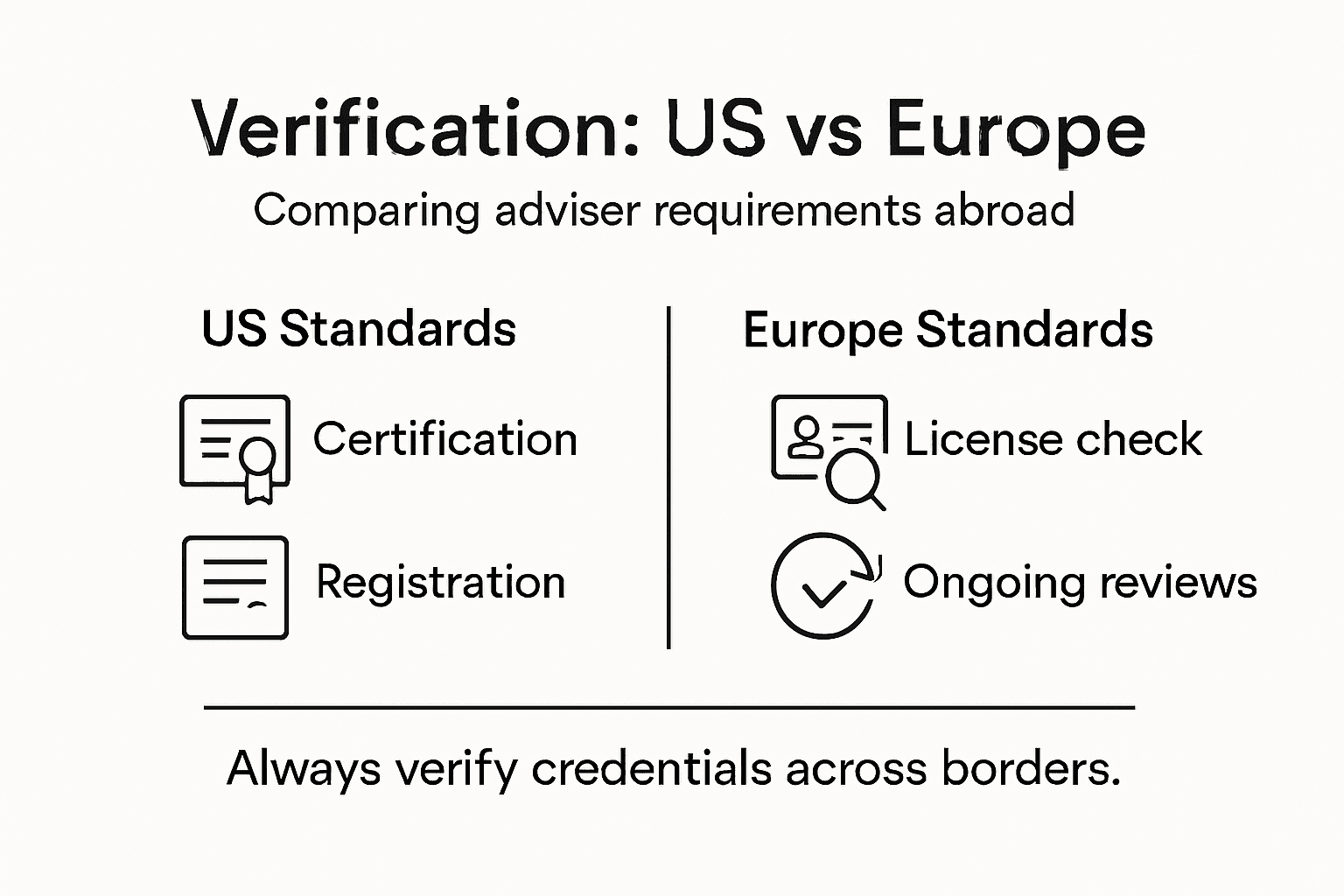
Key compliance issues include divergent tax reporting requirements, differing investment product regulations, and variations in financial adviser licensing standards. US citizens moving to Europe face unique challenges such as managing retirement accounts like 401(k)s, addressing potential tax implications, and ensuring their investment strategies remain compliant across multiple jurisdictions. These complexities underscore the critical importance of working with financial advisers who possess comprehensive cross-border expertise and understand the nuanced regulatory landscape.
The table below summarises common differences between US and European financial adviser regulations for expatriates:
Aspect | United States | Europe |
Licensing Authority | SEC or FINRA | Country-specific regulator |
Fee Disclosure Rules | Required, standardised formats | Varies, some less stringent |
Fiduciary Obligation | Often required | Varies by jurisdiction |
Cross-border Expertise | Not mandatory for all advisers | Essential for international work |
Pro tip: Consult with a cross-border financial specialist who holds regulatory certifications in both US and European jurisdictions to ensure comprehensive compliance and minimise potential legal and financial risks.
Accessing verified professionals for expat needs
US expatriates navigating international financial landscapes require strategic approaches to identifying and verifying professional financial advisers. Investment adviser verification resources provide critical tools for ensuring comprehensive background checks and confirming professional credentials before engaging financial services abroad.
The verification process involves multiple comprehensive steps that go beyond basic credential checking. Expatriates should examine an adviser’s regulatory registrations, professional certifications, disciplinary history, and specific expertise in cross-border financial management. This multi-layered approach helps mitigate risks associated with working with unqualified or potentially fraudulent financial professionals who may not understand the complex nuances of international financial planning.
Successful verification requires thorough research and strategic questioning. Expatriates should request detailed documentation of an adviser’s qualifications, including their experience with US-European financial regulations, tax compliance expertise, and track record of serving international clients. Key considerations include professional memberships, regulatory licenses, academic qualifications, and demonstrable experience in managing cross-border investment portfolios for US citizens residing in European jurisdictions.
The following table highlights strategic questions for verifying financial advisers serving US expatriates:
Question to Ask | Why It Matters | Good Indicator |
Which cross-border licences do you hold? | Confirms multi-jurisdictional compliance | Dual US/EU certification |
Can you provide client references? | Demonstrates proven experience with expats | Satisfied expat references |
How do you handle tax reporting differences? | Ensures accurate compliance advice | Detailed, tailored responses |
Pro tip: Always request a comprehensive professional portfolio from potential financial advisers, including their regulatory certifications, client testimonials, and specific experience working with US expatriate financial requirements.
Secure Your Financial Future Abroad with Verified Expertise
Navigating the complex world of cross-border financial advice demands trustworthy, verified professionals who understand the nuances of both US and European regulations. This article highlights the critical importance of verification to avoid risks such as unregulated advisers, hidden fees, and compliance pitfalls that can jeopardise your investments and retirement planning. If you are a US expatriate or someone managing wealth across borders, the challenge is real but manageable with the right support.

At Linkindependent, we simplify your search for regulated financial advisers, mortgage specialists, and tax experts who meet stringent professional standards and hold proper cross-border licences. Our platform specialises in connecting you with advisers who offer transparent fee structures and demonstrate expertise in handling 401(k)s, pensions, and tax matters tailored to American citizens living in Europe and beyond. Take action now to protect your financial future by finding your verified financial professional today and gain peace of mind through our trusted, independent matching process.
Frequently Asked Questions
What is financial advice verification?
Verification in financial advice involves assessing the credentials, qualifications, and compliance of a financial adviser to ensure they meet professional standards and legal requirements.
Why is it important to verify financial advisers?
Verifying financial advisers is crucial to protect yourself from potential misconduct, ensure ethical practice, and secure sound financial advice tailored to your specific needs, especially in cross-border situations.
What are the risks of working with unverified financial advisers?
Working with unverified financial advisers poses risks such as receiving inappropriate investment recommendations, encountering hidden fees, and experiencing potential misappropriation of funds, leading to significant financial losses.
How can I verify a financial adviser’s credentials?
You can verify a financial adviser’s credentials by checking their regulatory registrations, professional certifications, disciplinary history, and seeking client references to ensure they have expertise in cross-border financial management.
Recommended


Comments