

Master Compliance Workflow for Financial Advice Easily
- Dec 29, 2025
- 7 min read

For wealthy individuals and expats juggling complex cross-border investments, missing a single regulatory detail can trigger costly penalties and tax headaches in countries like the United Kingdom and France. British residents especially face strict reporting requirements that demand precise financial guidance from regulated professionals. This guide breaks down the essential steps for aligning advice with global standards, verifying adviser credentials, and safeguarding your financial interests through robust compliance strategies.
Table of Contents
Quick Summary
Key Point | Explanation |
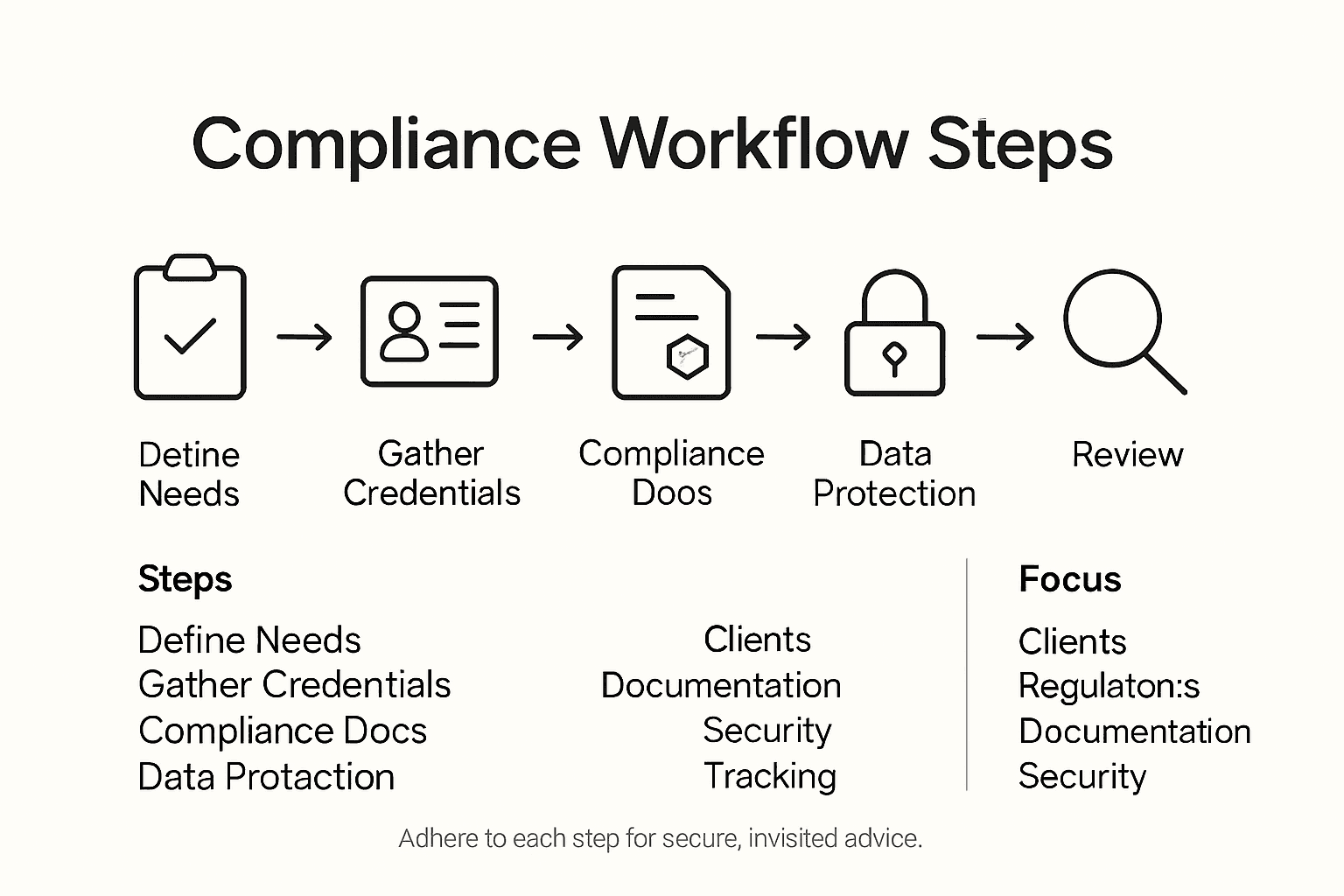
1. Define client needs thoroughly | Conduct comprehensive consultations to understand clients’ financial situations and tailor advice accordingly, ensuring compliance with regulations. |
2. Verify adviser’s credentials | Always confirm an adviser’s qualifications and professional standing through official regulatory bodies to ensure trustworthy financial advice. |
3. Document cross-border compliance | Create a detailed compliance matrix for different jurisdictions to meet regulatory standards, protecting client interests globally. |
4. Implement strong data protection measures | Establish rigorous data governance and security protocols to safeguard client information and adhere to legal regulations. |
5. Regularly review compliance adherence | Conduct routine audits and maintain a digital dashboard for monitoring compliance to identify and address potential risks swiftly. |
Step 1: Define client needs and regulatory scope
Defining client needs and regulatory scope represents the foundational phase of delivering compliant financial advice. This critical process ensures that financial recommendations precisely match individual client circumstances while adhering to stringent regulatory requirements.
To effectively scope your financial advice, begin by conducting a comprehensive client consultation that systematically explores their unique financial landscape. Global regulatory considerations shape advisory frameworks across different jurisdictions, making detailed discovery essential. Start by gathering comprehensive information about the client’s current financial situation, including income streams, existing investments, risk tolerance, short and long-term financial objectives, and personal circumstances such as family structure, age, and career trajectory.
During this discovery phase, document each aspect of the client’s financial profile meticulously. Your documentation should clearly outline which specific advice areas will be covered, establishing transparent boundaries that protect both the client and the financial adviser. This approach ensures alignment with regulatory best practices, particularly regarding best interests duty and comprehensive financial planning standards.
Professional insight: Always obtain written confirmation from the client acknowledging the agreed advice scope to prevent potential misunderstandings and demonstrate regulatory compliance.
Step 2: Gather and verify adviser credentials
Gathering and verifying financial adviser credentials forms a critical step in ensuring you receive professional and trustworthy financial guidance. This process protects your financial interests by confirming an adviser’s professional competence and regulatory compliance.
Verifying a financial adviser’s professional standing involves systematically examining multiple aspects of their professional background. Start by requesting their Statement of Professional Standing, which demonstrates adherence to recognised professional standards. Look for key qualifications such as Certified Financial Planner (CFP), Chartered Financial Analyst (CFA), or Certified Public Accountant (CPA) credentials. Cross reference these credentials with official regulatory bodies like the Financial Conduct Authority (FCA) to confirm their current validity and check for any historical disciplinary actions.
Pay close attention to the adviser’s registration status, professional memberships, and ongoing educational commitments. Reputable financial advisers will have transparent credentials and willingly provide documentation proving their professional expertise. Consider requesting references, reviewing their professional history, and verifying their current licensing status to build a comprehensive understanding of their professional capabilities.
Professional insight: Request digital copies of credentials and perform independent verification through official regulatory websites to ensure absolute authenticity of professional qualifications.
Here is a summary of key credentials and their significance for financial advisers:
Credential | Recognising Body | Main Benefit |
CFP (Certified Financial Planner) | Financial Planning Standards Board | Demonstrates broad financial planning expertise |
CFA (Chartered Financial Analyst) | CFA Institute | Signals advanced investment management skills |
CPA (Certified Public Accountant) | Professional accountancy bodies | Ensures strong financial and tax acumen |
FCA Authorisation | Financial Conduct Authority (UK) | Confirms legal ability to provide advice in the UK |
Step 3: Document cross-border compliance requirements
Documenting cross-border compliance requirements is a crucial step in establishing a robust international financial advisory framework. This process ensures your financial advice meets regulatory standards across multiple jurisdictions while protecting client interests and maintaining professional integrity.

Cross-border compliance documentation involves intricate regulatory navigation that demands meticulous attention to detail. Financial advisers must comprehensively map out the specific regulatory requirements for each jurisdiction where they provide services. This includes understanding local licensing boundaries, permissible service scopes, marketing restrictions, fiduciary standards, and Know Your Customer (KYC) and Anti Money Laundering (AML) obligations. Create a detailed compliance matrix that clearly outlines the regulatory landscape, identifying specific requirements for each country or region where financial advice will be delivered.
Ensure your documentation includes comprehensive risk assessments, alignment with local regulatory technical standards, and mechanisms for continuous reporting to both home and host national authorities. Develop a systematic approach to tracking regulatory changes, maintaining up-to-date compliance documentation, and implementing robust data protection protocols that respect local legal frameworks. Consistent and thorough documentation not only demonstrates professional diligence but also provides a critical safeguard against potential regulatory challenges.
Professional insight: Develop a dynamic compliance tracking system that enables real-time updates and provides instant visibility into regulatory requirements across different jurisdictions.
Step 4: Implement robust data protection protocols
Implementing robust data protection protocols is fundamental to maintaining client confidentiality and ensuring regulatory compliance in financial advisory services. This critical process safeguards sensitive financial information against potential security breaches and cyber threats.
Comprehensive data protection strategies require a multifaceted approach to security that goes beyond basic technical measures. Begin by establishing a data governance framework that incorporates role-based access controls, advanced encryption technologies, and stringent authentication mechanisms. Implement multifactor authentication protocols to ensure that only authorised personnel can access sensitive client information. Develop clear policies defining data access hierarchies, specifying exactly who can view specific types of financial data and under what circumstances.
Conduct regular security audits and vulnerability assessments to identify potential weaknesses in your data protection infrastructure. Create comprehensive documentation outlining your security protocols, including detailed procedures for data handling, storage, transmission, and destruction. Ensure your approach aligns with international data protection regulations such as GDPR, PCI DSS, and other relevant financial sector compliance standards. Train all team members on these protocols, emphasising the critical importance of maintaining client data confidentiality and understanding potential security risks.
Professional insight: Implement a continuous monitoring system that provides real-time alerts for any unusual data access patterns or potential security anomalies.
The table below highlights core data protection measures and their primary focus:
Security Measure | Area of Protection | Added Value |
Role-based access | Data confidentiality | Limits data access by role |
Advanced encryption | Data transmission | Secures client data in transit |
Security audits | Systems integrity | Identifies infrastructure weaknesses |
Multifactor authentication | User verification | Prevents unauthorised access |
Step 5: Review and validate compliance adherence
Reviewing and validating compliance adherence is a crucial process that ensures your financial advisory practice maintains the highest standards of regulatory integrity and professional excellence. This systematic evaluation protects both your organisation and your clients by identifying potential regulatory gaps or procedural weaknesses.
Begin your compliance review by creating a comprehensive checklist that covers all relevant regulatory requirements across different jurisdictions. Conduct a thorough audit of your existing processes, examining documentation, client interactions, advice delivery, and data management practices against current regulatory standards. Scrutinise each aspect of your operations to ensure full alignment with professional conduct rules, licensing requirements, and ethical guidelines.
Establish a routine schedule for periodic compliance reviews, incorporating both internal assessments and potential external audits. Develop a robust tracking mechanism that documents every review, captures any identified issues, and demonstrates a proactive approach to continuous improvement. Maintain detailed records of your compliance validation efforts, including corrective actions taken and evidence of ongoing regulatory adherence. This meticulous approach not only minimises regulatory risks but also demonstrates your commitment to maintaining the highest professional standards in financial advisory services.
Professional insight: Create a digital compliance dashboard that provides real-time visibility into your regulatory adherence status and flags potential compliance risks before they become significant issues.
Simplify Your Compliance Journey with Trusted Financial Experts
Navigating the complexities of compliance workflow for financial advice can feel overwhelming. From defining precise client needs to mastering cross-border regulations and ensuring robust data protection, the challenges can quickly multiply. This article highlights key pain points including verifying adviser credentials, documenting regulatory requirements, and maintaining continuous compliance adherence. Ensuring your financial advice meets diverse jurisdictional standards while protecting sensitive data is no easy task.
At Linkindependent.com, we understand these challenges and are dedicated to connecting you with verified, regulated financial professionals worldwide who excel in compliance and regulatory expertise. Our platform offers a transparent, independent way to find advisers who match your unique financial situation and cross-border needs. Whether you require expert guidance in international wealth planning, tax compliance, or legal advisory services, our verified experts streamline your journey through compliance demands.
Ready to overcome the complexities of financial compliance? Discover how our trusted network of professionals can simplify your advisory process and protect your interests today.

Take control of your financial advice compliance now by visiting Linkindependent.com and start your free consultation with a compliant expert who meets your needs. Your peace of mind in a regulated world begins here.
Frequently Asked Questions
How can I define client needs for financial advice?
To define client needs, conduct a thorough client consultation to gather information about their financial situation, including income, investments, and goals. Document each aspect clearly to establish the scope of advice and ensure it aligns with regulatory standards.
What credentials should I verify for a financial adviser?
You should verify key credentials such as Certified Financial Planner (CFP), Chartered Financial Analyst (CFA), or Certified Public Accountant (CPA). Request the adviser’s Statement of Professional Standing and check it against official regulatory bodies to confirm its validity.
How can I keep up with cross-border compliance requirements?
To stay updated on cross-border compliance requirements, create a compliance matrix that outlines the specific regulations for each jurisdiction. Regularly review and update this documentation to reflect any changes in local laws and regulations to maintain compliance.
What are effective data protection protocols for financial advisers?
Effective data protection protocols include implementing role-based access controls, advanced encryption, and multifactor authentication to safeguard client information. Regularly conduct security audits to identify vulnerabilities in your data handling processes.
How often should I review compliance adherence in my practice?
You should review compliance adherence at least annually, along with ongoing checks as needed. Establish a schedule for periodic compliance audits and document each review to ensure continuous adherence to regulatory standards.
Recommended
Comments