

Why US Expats Need Personalized Advice: Save 30% on Taxes
- 5 days ago
- 12 min read

Relocating to Europe offers exciting opportunities, but many US expats lose thousands annually because they assume domestic financial advisors can handle cross-border complexities. The truth is that managing finances across two continents requires specialized expertise in dual tax systems, international investment regulations, and multi-jurisdictional estate planning. Without personalized guidance from licensed cross-border professionals, you risk double taxation, regulatory penalties, and poorly structured portfolios that undermine your financial security.
Table of Contents
Key Takeaways
Point | Details |
Dual tax obligations demand expert navigation | US expats must comply with both US worldwide income reporting and European residency-based taxation, but bilateral treaties can reduce or eliminate double taxation when properly applied. |
Investment strategies require cross-border expertise | Currency volatility, regulatory compliance across FATCA and European rules, and tax-efficient portfolio structures need advisors experienced in both systems. |
Estate planning failures create costly consequences | Uncoordinated wills and trusts across jurisdictions lead to unintended heirs, excessive taxes, and legal conflicts that specialized planning prevents. |
Specialized advisors deliver measurable value | Licensed cross-border professionals hold certifications in multiple countries and coordinate tax, legal, and investment strategies to optimize outcomes. |
Common misconceptions delay effective planning | False beliefs about double taxation inevitability and domestic advisor capabilities prevent expats from accessing solutions that could save significant money. |
The Complexity of Cross-Border Financial Management for US Expats
US expatriates in Europe face a uniquely challenging financial environment that domestic advisors rarely understand. Unlike most nationals, US citizens must report worldwide income to the IRS regardless of where they live, while simultaneously meeting European residency-based tax requirements. This dual obligation creates a maze of compliance requirements where mistakes trigger penalties from two different tax authorities.
Each European country operates under distinct regulations for taxation, investment products, and estate planning. What works perfectly in Portugal may be illegal in France, and strategies compliant in Germany could be tax-inefficient in Spain. Without specialized knowledge, you’re essentially guessing at solutions that impact your financial future.
Common pitfalls include unintentional double taxation when treaty benefits aren’t claimed properly, regulatory breaches from holding non-compliant investment vehicles, and inefficient portfolio management that ignores currency risks. Managing US retirement accounts like 401(k)s and IRAs becomes particularly tricky when European pension rules and currency fluctuations enter the equation. These accounts may face unexpected taxation or reporting requirements in your new country of residence.
Pro Tip: Start planning at least six months before your move. Early coordination with international asset protection specialists prevents costly mistakes and maximizes tax treaty advantages that domestic advisors might miss.
The financial risks aren’t theoretical. Many expats discover problems years later during audits or when trying to transfer assets, facing back taxes, penalties, and lost investment returns that proper planning would have avoided. The complexity demands expertise that bridges both systems rather than superficial knowledge of either one alone.
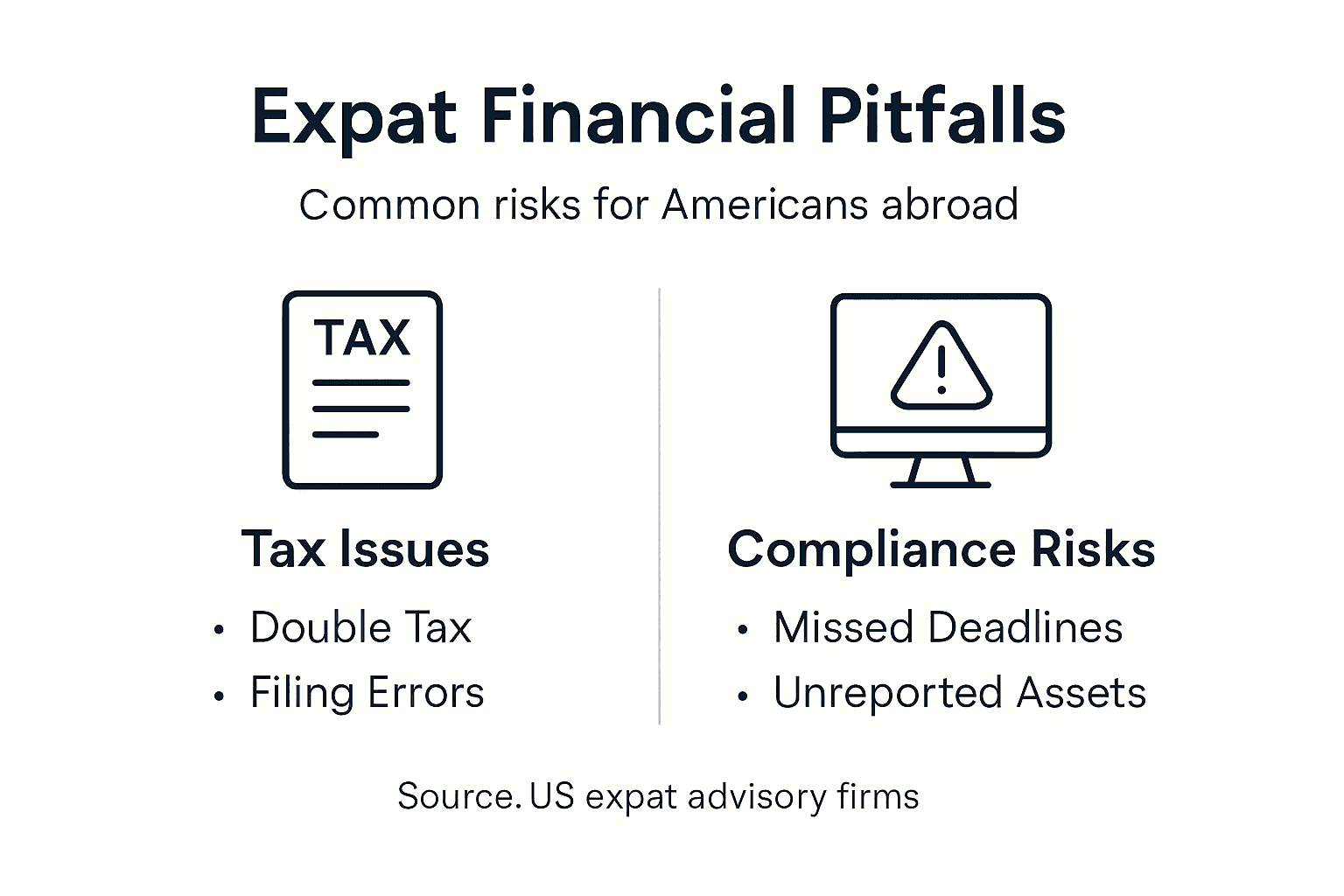
Cross-Border Tax Compliance: Navigating Dual Tax Jurisdictions
Your tax obligations don’t simplify when you move abroad; they multiply. US citizens must file annual income tax returns with the IRS reporting worldwide income, plus Foreign Bank Account Reports (FBARs) if foreign accounts exceed $10,000 at any point during the year. Miss an FBAR deadline and penalties start at $10,000 per violation, climbing rapidly for willful non-compliance.
Meanwhile, European countries tax residents on their worldwide income based on physical presence or domicile rules that vary by nation. Without proper planning, the same income gets taxed twice: once by the US and again by your European country. This is where tax treaties between nations become essential tools that specialized advisors leverage to reduce or eliminate double taxation.
Tax treaties provide several mechanisms to prevent double taxation:
Foreign Tax Credit: Claim credits on your US return for taxes paid to European countries, reducing US tax liability dollar for dollar up to certain limits.
Exemptions: Some treaty provisions exempt specific income types from taxation in one country, such as pension distributions or certain investment earnings.
Reduced Withholding Rates: Treaties often lower withholding taxes on dividends, interest, and royalties crossing borders.
Tie-Breaker Rules: When both countries claim you as a tax resident, treaties provide rules to determine your primary tax home.
Country | Foreign Tax Credit Available | Pension Exemptions | Estate Tax Treaty |
UK | Yes | Partial | Yes |
Germany | Yes | Yes | Yes |
France | Yes | Partial | Yes |
Spain | Yes | Partial | Yes |
Portugal | Yes | Yes (NHR program) | No |
Advisors experienced with FATCA (Foreign Account Tax Compliance Act) and CRS (Common Reporting Standard) compliance ensure your reporting meets both US and European requirements. These regulations require financial institutions worldwide to report account information to tax authorities, making non-compliance increasingly risky. Well-structured international tax planning can legitimately reduce your effective tax rate by 20 to 30 percent compared to uncoordinated filing.
Pro Tip: Maintain detailed records of all foreign taxes paid, including payment dates and currency conversions. These records prove essential when claiming treaty benefits and defending positions during audits from either country’s tax authority.
Investment and Wealth Management Strategies for Expatriates
Building wealth as an expat requires investment strategies that account for currency volatility, regulatory compliance, and tax efficiency across two financial systems. Currency fluctuations can dramatically impact your portfolio’s real value, especially when you earn in euros but maintain US dollar obligations or vice versa. A 10 percent currency swing effectively adds or subtracts that amount from your returns before considering investment performance.
Personalized investment advice addresses several critical areas:
Currency Risk Mitigation: Advisors structure portfolios with assets in multiple currencies matching your income sources and spending needs, reducing exposure to any single currency’s volatility.
Global Diversification: Rather than concentrating in US or European markets, properly diversified global investments capture growth opportunities worldwide while reducing regional concentration risks.
Tax-Efficient Wrappers: Certain investment vehicles offer tax advantages in one jurisdiction but penalties in another; specialists identify structures compliant and efficient in both systems.
Regulatory Compliance: US FATCA rules and European MIFID II regulations impose strict requirements on investment accounts, with severe penalties for violations that specialized advisors help you avoid.
Many US mutual funds and ETFs create tax reporting nightmares for expats due to PFIC (Passive Foreign Investment Company) rules that trigger punitive taxation. European investment products face similar issues when held by US taxpayers. Wealth management tailored to expat circumstances identifies compliant alternatives that meet your goals without creating tax problems.

Retirement account management becomes particularly complex. Traditional 401(k) and IRA contributions may not receive tax deductions in your European country, while European pension contributions might not qualify for US tax benefits. Roth conversions, which can be tax-neutral in the US, may trigger immediate European taxation depending on local rules. These interactions require careful analysis to avoid expensive mistakes.
Your investment time horizon, risk tolerance, and goals matter, but expat portfolios must also consider repatriation plans. Will you return to the US eventually? Retire in Europe? Move to a third country? Each scenario demands different positioning of assets and account structures that domestic advisors rarely consider.
Estate Planning Across Borders: Challenges and Solutions
Inheritance laws and estate tax rules vary dramatically between the US and European countries, creating a minefield for expatriates who fail to coordinate their planning. US estate tax applies to your worldwide assets with a substantial exemption (currently over $13 million per individual), but many states impose additional estate or inheritance taxes at lower thresholds. European countries range from having no estate taxes to imposing rates exceeding 50 percent on certain transfers.
Without coordinated planning, your assets may:
Pass to unintended beneficiaries due to conflicting laws about valid wills and succession rules
Face double taxation when both US and European authorities claim estate tax on the same assets
Trigger forced heirship laws in countries like France that override your intended distribution wishes
Create liquidity crises when heirs owe immediate taxes but assets are illiquid or located across multiple jurisdictions
Expert advisors coordinate wills, trusts, and beneficiary designations to ensure consistency across jurisdictions. This means drafting separate wills for US and European assets when beneficial, structuring trusts that both countries recognize, and positioning assets to minimize combined tax burdens. Something as simple as joint account ownership can have vastly different legal and tax consequences across borders.
Beneficiary designations on retirement accounts and life insurance require particular attention. A designation valid under US law might be unenforceable or create tax problems in Europe. Some European countries don’t recognize transfer-on-death or payable-on-death designations that Americans use routinely, forcing assets through probate unnecessarily.
“Cross-border estate planning failures frequently cause assets to transfer to incorrect beneficiaries and trigger excessive taxation that proper coordination would prevent, resulting in losses exceeding 30 percent of estate value in some cases.”
Powers of attorney and healthcare directives face similar recognition issues. Documents valid in your US state may be rejected by European institutions, leaving family members unable to act during emergencies. International wealth planning includes preparing documents that comply with both systems, often requiring notarization, apostille certification, and professional translation.
The Role of Specialized Cross-Border Financial Advisors
Not all financial advisors possess the qualifications or experience to serve US expatriates effectively. Specialized cross-border advisors distinguish themselves through licensing in multiple jurisdictions, deep expertise across tax and investment systems, and established networks of international legal and tax professionals. These credentials aren’t optional luxuries; they’re essential qualifications for delivering competent advice.
Licensing requirements differ substantially between countries. A US-based advisor holding CFP (Certified Financial Planner) or CPA credentials has no automatic authority to provide investment advice in European countries, where separate registrations and qualifications are mandatory. Similarly, European advisors qualified in their home markets cannot legally advise on US securities or tax matters without appropriate US credentials.
Advisor Type | Expertise | Limitations |
Domestic US Advisor | Deep knowledge of US tax, investment, and estate planning | Limited understanding of European regulations, typically cannot advise on foreign investments or coordinate with overseas professionals |
European-Only Advisor | Expert in local country’s rules and investment products | No US tax expertise, unfamiliar with FATCA/FBAR requirements, cannot structure US-compliant solutions |
Specialized Cross-Border Advisor | Licensed in both jurisdictions with expertise bridging systems | May have higher fees but delivers coordinated solutions preventing costly mistakes |
True cross-border specialists maintain professional relationships with tax attorneys, international CPAs, and legal experts in multiple countries. Complex situations require coordinated advice where your financial advisor, US tax preparer, European tax consultant, and estate planning attorney all work from the same strategy. This coordination prevents conflicting advice that creates rather than solves problems.
Pro Tip: Before engaging any advisor, verify their specific licenses and registrations with regulatory authorities in both countries. Ask for references from clients in similar cross-border situations and confirm they carry appropriate professional liability insurance covering international advice.
The value delivered by specialized cross-border advisers extends beyond compliance to proactive optimization. They identify opportunities like tax treaty benefits, favorable investment timing around tax year differences, and estate planning techniques that domestic advisors never consider because they lack exposure to both systems. This expertise typically saves significantly more than the advisor’s fees through avoided mistakes and optimized strategies.
Regulated advisers serving expats also provide accountability and consumer protection that unregulated consultants cannot offer. When advisors hold licenses from recognized authorities, you gain recourse through regulatory complaint processes and professional standards enforcement that protects your interests.
Common Misconceptions About Cross-Border Financial Advice
Several persistent myths prevent US expatriates from seeking appropriate guidance or benefiting fully from specialized advice. Correcting these misconceptions helps you make informed decisions about your financial planning needs.
Misconception: My domestic US advisor can handle my expat finances. Reality: While your US advisor may be excellent at domestic planning, cross-border situations require specific expertise in foreign tax systems, international investment regulations, and multi-jurisdictional estate planning that most US advisors lack. Assuming competence where it doesn’t exist leads to expensive mistakes.
Misconception: Double taxation is unavoidable for US expats. Reality: Tax treaties between the US and European countries provide substantial relief through foreign tax credits, exemptions, and reduced withholding rates. Proper planning often eliminates or significantly reduces double taxation, but only if you understand and apply treaty provisions correctly.
Misconception: Estate planning is simple because I don’t have a large estate. Reality: Cross-border estate complexity stems from conflicting legal systems, not just estate size. Even modest estates face challenges from differing succession laws, beneficiary designation rules, and administrative requirements that create problems when planning isn’t coordinated across jurisdictions.
These misconceptions often delay action until problems emerge, typically during tax audits, when transferring assets, or after death when families discover planning failures. By that point, solutions become expensive or impossible, whereas proactive planning with qualified specialists prevents most issues entirely.
Another common misunderstanding involves assuming that because you’re below estate tax thresholds in both countries, you don’t need estate planning. Tax is only one concern; ensuring assets transfer according to your wishes, avoiding probate complications, and providing for incapacitated decision making all require proper documentation that functions across borders.
Practical Steps to Finding and Working with the Right Advisor
Selecting and collaborating effectively with specialized cross-border financial advisors requires a systematic approach that protects your interests while accessing needed expertise.
Verify Credentials and Licensing: Confirm the advisor holds appropriate registrations and licenses in both the US and your European country of residence by checking regulatory databases directly, not relying solely on advisor claims.
Evaluate Cross-Border Experience: Ask specifically about the number of US expat clients they serve, their experience with your European country’s regulations, and their process for coordinating advice across jurisdictions.
Use Trusted Verification Platforms: Services like Linkindependent.com pre-screen advisors for proper licensing and experience, saving you research time while reducing risk of engaging unqualified or fraudulent practitioners.
Assess Communication and Transparency: Request clear explanations of fee structures, potential conflicts of interest, and their fiduciary obligations; avoid advisors who obscure costs or provide vague answers about their compensation.
Schedule Regular Reviews: Cross-border rules change frequently, requiring at least annual plan reviews and immediate consultation when life circumstances change such as births, deaths, relocations, or significant asset transfers.
Maintain Clear Documentation: Keep copies of all advice received, planning documents, and communications with advisors, which prove essential during tax audits or when coordinating between professionals.
Pro Tip: Request fee transparency upfront and confirm fiduciary commitment in writing. Advisors who hesitate to clearly document their fees or fiduciary duty to act in your best interest may prioritize their compensation over your outcomes.
The search process needn’t be overwhelming. Factors for choosing financial advisers abroad include credentials, experience, communication style, and fee structure, but the most critical element is verification of claimed expertise through independent research and regulatory checks.
Your relationship with your advisor should feel collaborative rather than transactional. Good advisors educate you about options, explain reasoning behind recommendations, and respect your final decisions while providing professional guidance. If you feel pressured, confused, or excluded from the decision-making process, those are red flags suggesting you should seek alternative advisors.
Explore Expert Cross-Border Financial Advisory Services Today
The complexities of managing finances across US and European jurisdictions demand specialized expertise that domestic advisors rarely provide. Link Independent connects you with licensed, experienced cross-border advisors who understand both systems and coordinate strategies preventing costly mistakes while optimizing your financial outcomes.
[

Explore the various types of financial advisers serving international clients to understand which specialists address your specific needs, from tax planning to investment management to estate coordination. Understanding why you should use cross-border advisers helps you appreciate the value they deliver beyond what domestic professionals offer. Link Independent provides trusted guidance through verified matches with regulated professionals committed to transparent, fiduciary advice tailored to your unique cross-border circumstances.
Frequently Asked Questions
What qualifications should a cross-border financial advisor have?
Qualified cross-border advisors hold active licenses or registrations in both the US and your European country of residence, such as CFP or RIA registration in the US combined with appropriate European credentials. They should demonstrate substantial experience serving US expatriates specifically, maintain professional liability insurance covering international advice, and have established relationships with tax and legal professionals in both jurisdictions.
How can I avoid double taxation when living in Europe?
Double taxation avoidance relies on properly applying bilateral tax treaties between the US and your European country through foreign tax credits, exemptions, and strategic timing of income recognition. Working with advisors experienced in treaty provisions ensures you claim all available benefits, file required forms correctly, and structure income and investments to minimize combined tax burdens across both countries.
Why is currency risk important in expat investment strategies?
Currency fluctuations directly impact your portfolio’s real purchasing power and can add or subtract 10 to 20 percent from investment returns independent of underlying asset performance. When you earn income in one currency but maintain obligations or plan eventual spending in another, currency risk becomes a significant factor requiring intentional portfolio positioning across multiple currencies matching your actual financial life.
How often should I update my cross-border financial plan?
Review your cross-border financial plan at least annually, as tax laws, treaty provisions, and regulations change frequently in both jurisdictions. Additionally, update your plan immediately following major life events such as marriage, divorce, births, deaths, significant asset transfers, changes in employment, or relocation between countries, as these events often trigger new tax obligations or planning opportunities.
Can estate planning for US expats help avoid probate complications?
Proper cross-border estate planning substantially reduces probate complications by coordinating documents across jurisdictions, using trusts where appropriate, and structuring asset ownership and beneficiary designations to align with both US and European legal requirements. This coordination prevents conflicts between legal systems, ensures assets transfer according to your wishes, and often allows heirs to access funds more quickly with lower administrative costs.
Recommended
Comments