

Understanding FINRA's role for investors in 2026
- 3 days ago
- 9 min read

Many U.S. investors mistakenly believe FINRA’s regulatory authority stops at American borders. This misconception can prove costly, especially for expats managing cross-border investments. FINRA oversees approximately 624,000 registered brokers across 75 countries, wielding enforcement powers that extend far beyond U.S. territory. Whether you’re relocating to Europe or maintaining investments whilst living abroad, understanding FINRA’s global reach protects your financial interests. This article clarifies FINRA’s enforcement mechanisms, cross-border compliance requirements, and practical tools investors can use to safeguard their portfolios internationally.
Table of Contents
Key takeaways
Point | Details |
Global authority | FINRA regulates registered firms and individuals in approximately 75 countries worldwide |
Rule 8210 power | FINRA can demand information and testimony from associated persons regardless of their location |
Severe penalties | Non-compliance with FINRA requests can result in expulsion or permanent industry bars |
Investor tools | BrokerCheck and complaint mechanisms help verify professionals and report misconduct |
Cross-border complexity | Investors must navigate conflicting regulations between U.S. and foreign jurisdictions |
What is FINRA and how does it protect investors?
FINRA operates as America’s primary self-regulatory organisation overseeing broker-dealers and exchange markets. The organisation monitors approximately 3,400 firms operating through 152,000 branches globally, ensuring these entities comply with securities regulations that protect investor interests. FINRA’s role is to protect investors by maintaining market integrity, enforcing compliance standards, and providing educational resources that help people make informed investment decisions.
For cross-border investors, FINRA’s oversight creates a safety net that extends internationally. The organisation investigates complaints, disciplines firms and individuals who violate rules, and maintains transparent records accessible to the public. When U.S. citizens invest through FINRA-registered professionals, they gain protections that persist even after relocating abroad. This regulatory framework becomes particularly valuable for expats navigating unfamiliar financial systems whilst maintaining American investment accounts.
FINRA provides several critical investor protections:
Background verification tools showing broker disciplinary histories and qualifications
Formal complaint filing mechanisms for reporting suspected misconduct or fraud
Educational materials explaining investment risks and regulatory requirements
Arbitration services for resolving disputes between investors and firms
Understanding financial regulation for US expats becomes essential when managing investments across borders. FINRA’s authority doesn’t diminish simply because you’ve moved to Barcelona or Berlin. The organisation continues monitoring registered professionals serving American clients globally, creating accountability that protects your interests regardless of physical location. This persistent oversight distinguishes FINRA-regulated investments from unregulated offshore alternatives that may lack comparable investor protections.
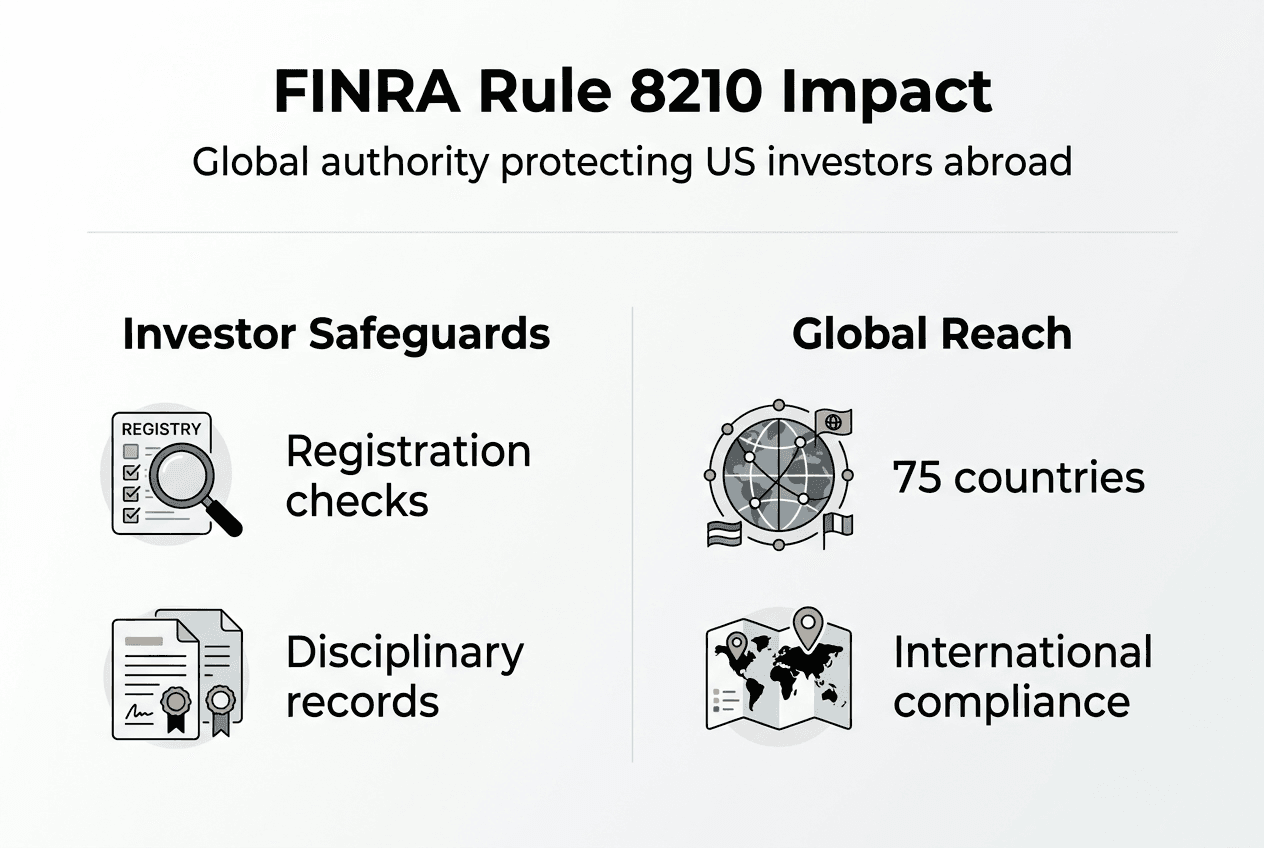
Pro Tip: Before working with any investment professional, verify their FINRA registration status and review their disciplinary history through BrokerCheck, even if they operate primarily outside the United States.
Understanding FINRA rule 8210 and its cross-border reach
FINRA Rule 8210 mandates that firms and associated persons must provide information and testimony upon request, regardless of where they’re physically located. This powerful investigative tool enables FINRA to examine conduct, gather evidence, and enforce compliance across international boundaries. The rule applies to anyone registered with FINRA, whether they work from Manhattan or Madrid, creating uniform accountability standards that transcend geographical limitations.
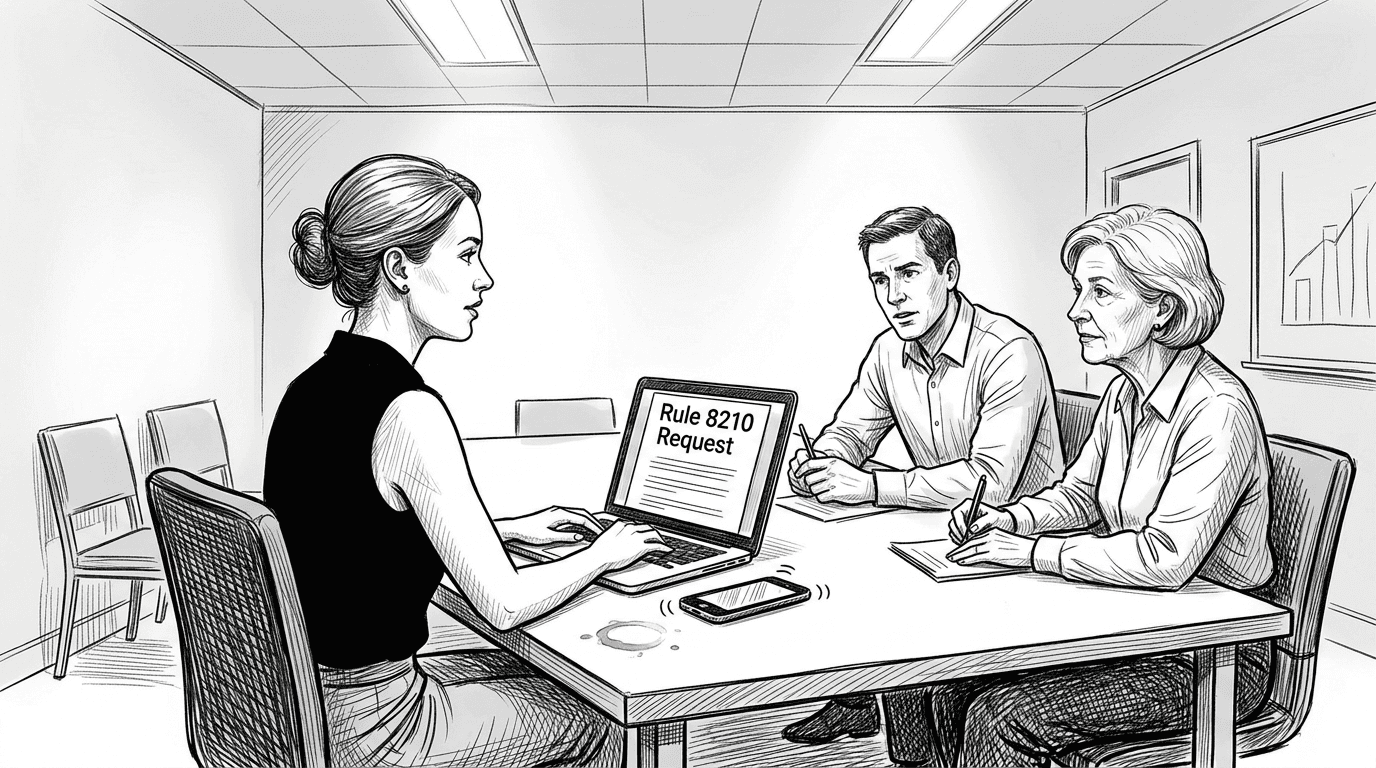
FINRA’s investigative authority extends beyond U.S. borders to approximately 75 countries where registered persons operate. When FINRA initiates an investigation, associated individuals must respond completely and promptly, even if doing so conflicts with local laws or creates practical difficulties. This extraterritorial reach reflects FINRA’s commitment to maintaining consistent regulatory standards for all registered professionals serving American investors, regardless of operational location.
The consequences for ignoring Rule 8210 requests prove severe. Failure to comply can result in expulsion from FINRA membership or permanent bars from the securities industry. These penalties apply automatically, without requiring proof of underlying misconduct. Simply refusing to cooperate with an investigation constitutes a violation serious enough to end a professional’s career, making compliance non-negotiable for registered individuals operating internationally.
Compliance Requirement | Global Application | Penalty for Non-Compliance |
Provide requested documents | Applies in all 75 countries with registered persons | Expulsion from FINRA membership |
Submit to testimony | Required regardless of location or local laws | Permanent industry bar |
Maintain accessible records | Must be production-ready globally | Suspension of registration |
Respond within specified timeframes | No extensions for international locations | Automatic disciplinary action |
Firms operating internationally must establish systems ensuring compliance readiness across all jurisdictions. This includes maintaining document retention protocols that satisfy FINRA requirements, implementing communication surveillance that captures cross-border interactions, and training staff about their obligations under Rule 8210. The burden falls entirely on firms and individuals to reconcile conflicts between FINRA demands and foreign regulations, with FINRA offering no exceptions based on local law complications.
Pro Tip: If you’re working with a FINRA-registered adviser who operates internationally, confirm they maintain robust compliance systems capable of responding to regulatory requests across jurisdictions, protecting both their practice and your investments.
Understanding financial due diligence cross-border processes helps investors recognise whether their advisers maintain appropriate compliance infrastructure. Professionals who dismiss FINRA’s international reach or suggest regulatory requirements don’t apply abroad should raise immediate red flags. Legitimate registered advisers acknowledge their ongoing obligations and maintain systems ensuring continuous compliance regardless of where they conduct business.
Challenges and implications for cross-border investors and firms
Foreign data protection regulations frequently conflict with FINRA’s information demands, creating legal dilemmas for firms and individuals. European GDPR requirements, for instance, restrict data transfers and impose strict privacy protections that may directly contradict Rule 8210 compliance obligations. FINRA acknowledges these potential conflicts but maintains its position that compliance remains mandatory regardless of local law complications. This uncompromising stance forces firms to navigate competing legal requirements without clear resolution paths.
The practical reality proves challenging. FINRA Rule 8210 provides no exception based on foreign law, even when local data protection statutes make compliance technically illegal under domestic regulations. Firms face impossible choices: violate FINRA rules and risk expulsion, or breach local laws and face foreign penalties. Many organisations address this by obtaining explicit client consent for data transfers, implementing dual-jurisdiction compliance frameworks, or restricting services in problematic jurisdictions entirely.
Cross-border investors encounter several specific risks:
Exposure to regulatory investigations spanning multiple jurisdictions simultaneously
Potential account freezes or restrictions during cross-border compliance reviews
Limited recourse if advisers face disciplinary actions in foreign jurisdictions
Complexity verifying whether international advisers maintain proper FINRA registration
Firms operating globally must anticipate FINRA investigations and maintain perpetual readiness. This includes preserving communications across platforms and jurisdictions, ensuring document accessibility despite geographic distribution, and training personnel about response protocols. The expectation isn’t merely reactive compliance when investigations arise, but proactive systems enabling immediate, complete responses to any FINRA inquiry regardless of where evidence or witnesses reside.
For investors, these regulatory complexities underscore the importance of thorough due diligence before engaging cross-border advisers. Understanding investment risk profiling cross-border investors face helps identify potential regulatory vulnerabilities in advisory relationships. Advisers who operate internationally without clear compliance frameworks, transparent regulatory status, or established response protocols present elevated risks beyond typical investment performance concerns.
Pro Tip: Request explicit confirmation from international advisers about their FINRA registration status, compliance infrastructure, and protocols for handling cross-jurisdictional regulatory requests before entrusting them with your investments.
The regulatory landscape continues evolving as FINRA refines its international enforcement approach. Recent guidance emphasises that firms cannot use foreign operations to evade U.S. regulatory oversight. This principle affects investors by ensuring consistent protections regardless of where their registered adviser operates, but also creates complexity requiring professional guidance to navigate successfully.
Practical guidance for investors: Using FINRA resources to protect yourself
BrokerCheck provides free, comprehensive background information on registered brokers and firms, serving as your primary due diligence tool. This database reveals professional qualifications, employment history, regulatory actions, customer complaints, and arbitration awards. Before engaging any investment professional, spend fifteen minutes reviewing their BrokerCheck profile. BrokerCheck is a valuable tool for verifying credentials and uncovering disciplinary histories that might indicate problematic patterns or elevated risks.
The verification process follows these steps:
Visit FINRA’s BrokerCheck website and enter the professional’s name or firm identifier
Review their complete employment history, noting frequent job changes that might signal issues
Examine any disclosed regulatory actions, customer complaints, or arbitration cases
Verify current registrations and qualifications match the services they’re offering you
Cross-reference information with state securities regulators for comprehensive background checks
Document your findings and ask direct questions about any concerning disclosures
When misconduct concerns arise, investors can file a complaint with FINRA directly through their website. This formal process triggers regulatory review and potential investigation, protecting other investors from similar issues. Filing complaints proves particularly important for cross-border situations where traditional legal recourse may prove complicated or expensive. FINRA’s complaint mechanism provides accessible oversight regardless of where you currently reside or where the alleged misconduct occurred.
Due Diligence Step | Purpose | Red Flags to Watch |
BrokerCheck review | Verify credentials and history | Multiple customer complaints, regulatory actions, frequent firm changes |
Registration verification | Confirm current authorisation | Lapsed registrations, unauthorised activity claims |
Disclosure document review | Understand fees and conflicts | Vague fee structures, undisclosed conflicts, complex compensation |
Reference checks | Validate professional reputation | Reluctance to provide references, negative peer feedback |
Perform thorough due diligence on investment offerings themselves, not just the professionals recommending them. Request and carefully review all disclosure documents, including prospectuses, offering memorandums, and fee schedules. Legitimate investments come with comprehensive documentation explaining risks, costs, and operational details. Vague or incomplete disclosures suggest potential problems, especially in cross-border contexts where regulatory oversight may prove less robust than domestic investments.
Understanding why use cross-border advisers helps you evaluate whether international advisory relationships genuinely serve your interests or simply create unnecessary complexity. Legitimate cross-border advisers provide clear value through specialised expertise, access to international markets, or tax-efficient structures unavailable domestically. Advisers who cannot articulate specific benefits beyond generic claims likely don’t justify the additional regulatory complexity they introduce.
Pro Tip: Create a standardised due diligence checklist incorporating BrokerCheck reviews, disclosure document analysis, and reference verification, then apply it consistently before making any investment decision or engaging new advisers.
Recognise the distinction between fraud prevention and regulatory protection. FINRA oversight doesn’t guarantee investment performance or eliminate fraud risk entirely. It provides accountability mechanisms, disciplinary frameworks, and investor recourse unavailable with unregulated alternatives. Understanding global investment process steps helps you implement comprehensive vetting procedures that combine FINRA resources with independent analysis, creating layered protection against both regulatory violations and investment fraud.
How Link Independent supports global investors navigating FINRA regulations
Navigating FINRA regulations whilst managing cross-border investments requires specialised expertise that Link Independent provides to U.S. expats and international investors. We connect you with verified, regulated financial professionals who understand both FINRA compliance requirements and the complexities of managing investments across jurisdictions. Our platform simplifies finding advisers who maintain proper registrations, implement robust compliance frameworks, and deliver transparent guidance tailored to your cross-border situation.
[

Our expertise extends beyond simple adviser matching. We provide comprehensive resources covering financial due diligence cross-border processes, helping you implement thorough vetting procedures before engaging international professionals. Understanding the global investment process steps ensures you approach cross-border investing systematically, combining regulatory awareness with practical investment strategies. Whether you’re relocating to Europe, maintaining U.S. investments whilst abroad, or navigating complex tax situations spanning multiple jurisdictions, Link Independent connects you with professionals equipped to address your specific circumstances whilst maintaining full regulatory compliance.
FAQ
What does FINRA’s rule 8210 mean for investors living abroad?
Rule 8210 requires FINRA-registered professionals serving you to cooperate fully with regulatory investigations regardless of where they or you reside. This protects your interests by ensuring consistent oversight and accountability even when advisers operate internationally. Non-compliance by your adviser could result in their expulsion, potentially disrupting your investment management.
How can investors verify the background of their broker or investment adviser?
Use FINRA’s free BrokerCheck tool online to access comprehensive background information including qualifications, employment history, and disciplinary records. This verification takes minutes but reveals critical information about professional conduct and regulatory compliance. Always review BrokerCheck profiles before engaging any investment professional, regardless of personal recommendations or impressive credentials.
What should an investor do if they suspect fraud or misconduct?
File a formal complaint immediately through FINRA’s website, providing detailed information about the suspected violations. FINRA investigates complaints and can take disciplinary action protecting other investors from similar issues. Document all communications and transactions related to the suspected misconduct, preserving evidence that supports your complaint and any potential arbitration or legal proceedings.
Does FINRA protect investors who work with advisers based outside the United States?
FINRA’s authority extends to registered professionals operating in approximately 75 countries, providing consistent oversight regardless of physical location. However, protection depends on whether your adviser maintains active FINRA registration and operates within regulated frameworks. Verify registration status through BrokerCheck before assuming FINRA protections apply to your specific advisory relationship.
How do foreign data protection laws affect FINRA’s investigative authority?
FINRA maintains that Rule 8210 compliance remains mandatory despite conflicts with foreign privacy regulations or data protection statutes. Registered professionals must reconcile these competing requirements, often through client consent mechanisms or dual-jurisdiction compliance frameworks. As an investor, understand that your adviser’s FINRA obligations supersede local law complications, ensuring consistent regulatory accountability regardless of operational jurisdiction.
Recommended
Comments